Accessibility Settings

You can use these controls to adjust properties of the website’s presentation. Read more about the Festival’s Accessibility Guide

Programmes

23 September 2018

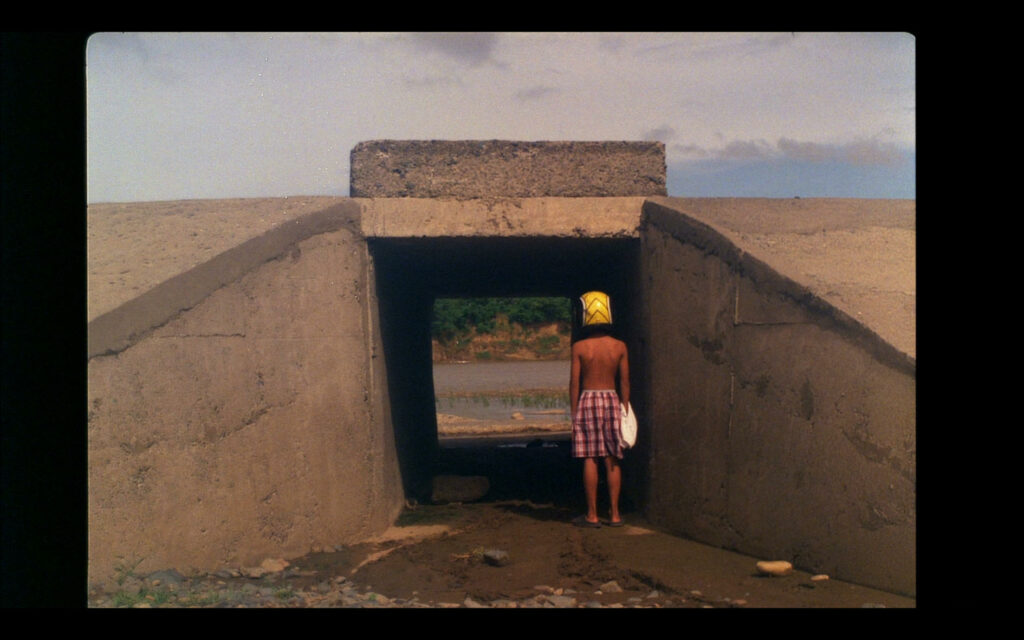
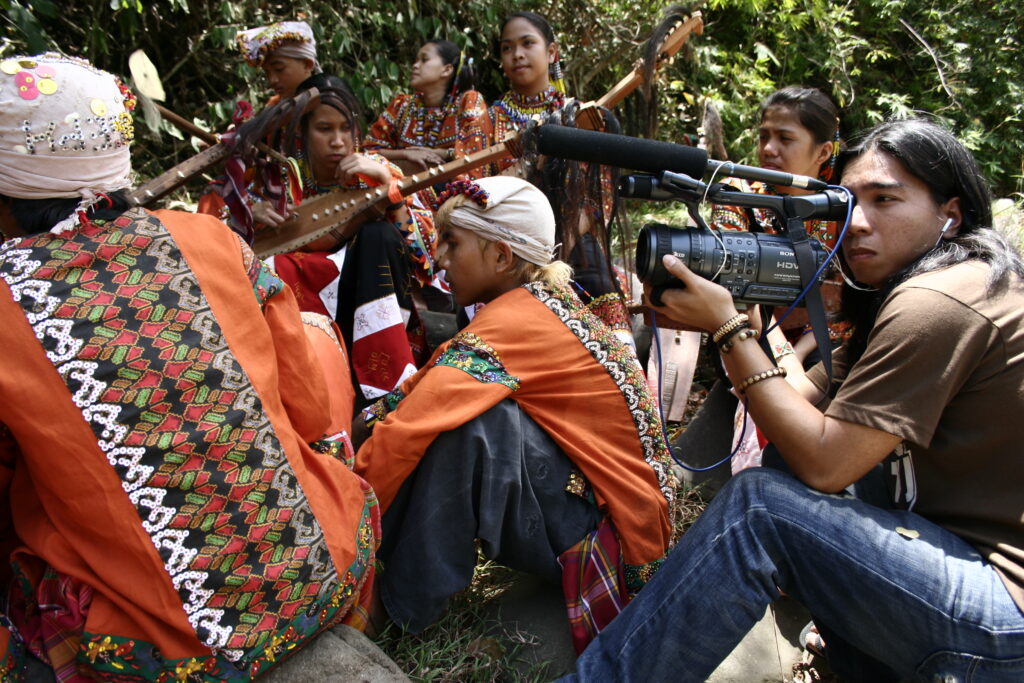
‘Lukas, in the middle of the film, the actress will pay a visit. You’ll fall in love with her. And you’ll understand your father. I’ll become your memory. I haven’t shown you the middle yet’. Thus begins John Torres’s latest dream of a documentary, a highly experimental, gloriously free-form coming-of-age story. Shortly after the arrival of a film crew that throws his tiny, usually quiet village into a frenzy of commotion, Lukas’s father, Mang Basilio, announces that he is a ‘tikbalang’, the half-horse, half-man of Filipino folklore. When Mang Basilio disappears, the awkward, baffled Lukas sets out on a journey of self-discovery that will include a ‘river of forgetting’, invisible voices and a hallucinatory blurring of reality and fantasy. Torres has already carved out an idiosyncratic niche for himself in the thriving world of documentary-fiction hybrids, and this is his most personal and expansive work to date. — Film Society of Lincoln Center

Q&A with filmmaker John Torres
Run Time

85 mins
More Info
20 September 2018

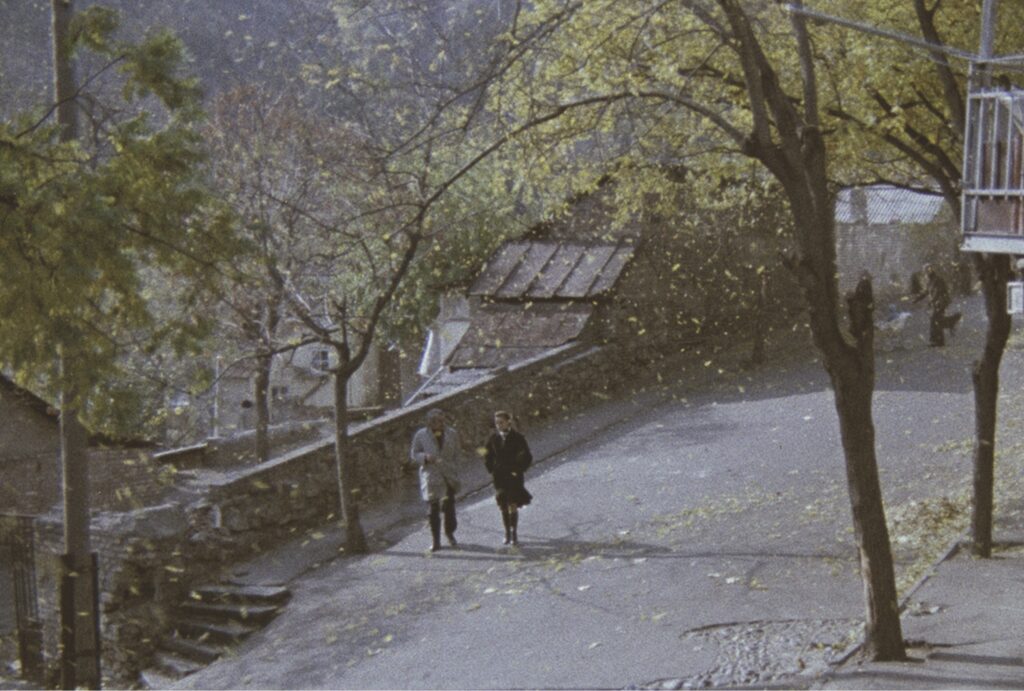
Years When I Was a Child Outside is a meta-film following Torres’ perspective as the son of best- selling self-help author Rodolfo Torres, whose instructional books and tapes made in early 1980s Philippines aimed to ‘help raise brighter children’. Upon learning that his father bore illegitimate children, the narrator decides to run away. The film is not only a chronicle of stories through foreign regions but also a probing letter from outside circles; an honest account of illegitimate views from uneven terrain; and a narrative-driven exploration of the nooks and peripheries of the body, geography and weather. As the journey progresses, the film increasingly traverses the countries of revelation, film, and heart—to where all journeys are meant to end with.

Q&A with filmmaker John Torres
Run Time

100 mins
More Info
20 September 2018

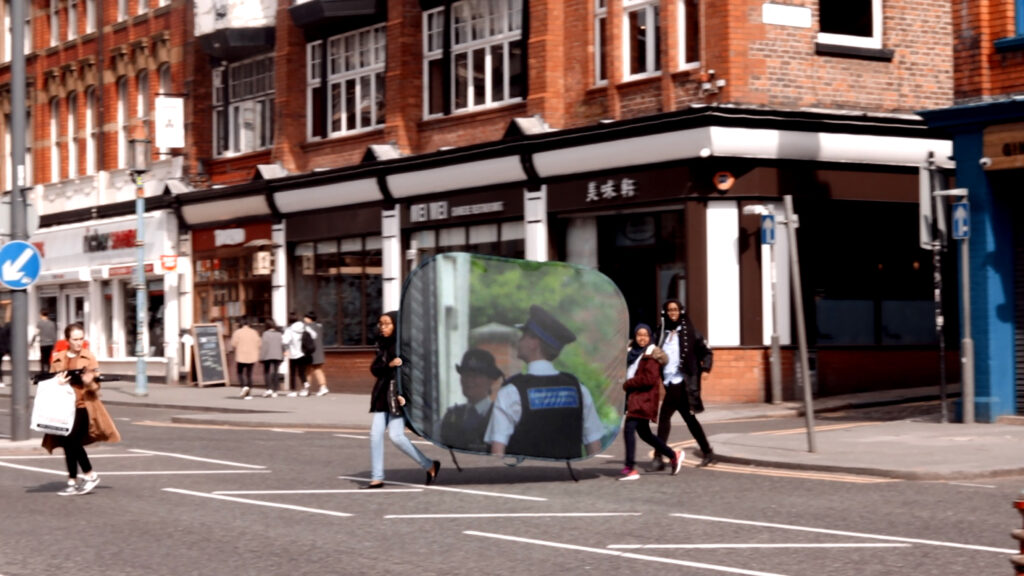
How Does an Invisible Boy Disappear? emerges from a nine-month collaboration with Liverpool Black Women Filmmakers, a new women’s film collective made up of young women from a Somali & Pakistani background. The film documents the group as they work together to create a thriller focusing on a teenage girl’s attempt to find a missing local boy. Comprised of candid footage captured during the workshop process, behind the scenes filming and archive footage of anti-racist organising in the aftermath of the Toxteth race riots, the film questions how modes of representation and societal structures are gendered and racialised.

Commissioned by Liverpool Biennial and supported by Tenderpixel, London

Country

Run Time

25 mins

Year

2018
More Info
20 September 2018

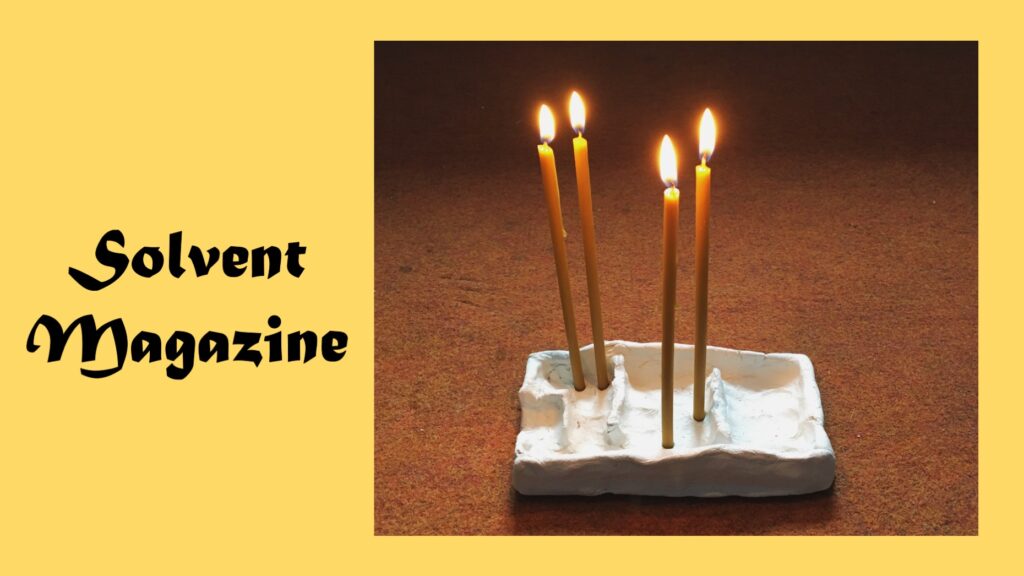
Lucy Clout presents a new body of work titled Solvent Magazine, including sculptural and video pieces made during her six-month residency with Berwick Visual Arts and BFMAF. An assemblage of parts that brings together research around close readings of bodies— diagnostic narratives, pleasure and ambiguity are used as ways to think about knowledge, evidence and queer reproduction.

Part-waiting room, part-publishing house, Solvent Magazine presents: a £23.00 USB microscope camera, the story of a temp’s discretion, a new design for privacy screen glass which mimics the saliva of a person with secure attachment style, two piss coloured Perspex doors and a layer of plastic to keep out distractions.

Director

Country

Year

2018
More Info
20 September 2018

Agnieszka Polska’s unsettling perspective on humanity takes the form of an animated child-faced sun with melancholy eyes. Digitally sourced images paint a frantic image of a crumbling world. From a distance, the sun jokes about environmental issues and comments on the tumultuous times in which the world finds itself.

The film borrows its title from a poem by Polish poet of the realist/positivist style Maria Konopnicka (1842–1910). The poem ‘What the sun has seen’ recounts in a childish style the quotidian, peaceful rural activities and happy family life of the nation in the countryside, as observed by the sun on its daily journey across the sky. Polska offers her own dark, ironic version of the poem, dealing with contamination by information (information waste) and the role of the ‘helpless observer’ who, like the ‘Angel of History’ in the well-known adage by Walter Benjamin, can only look at the debris piled by lived time without being able to intervene.

Director

Countries

Run Time

7 mins

Year

2017
More Info
21 September 2018

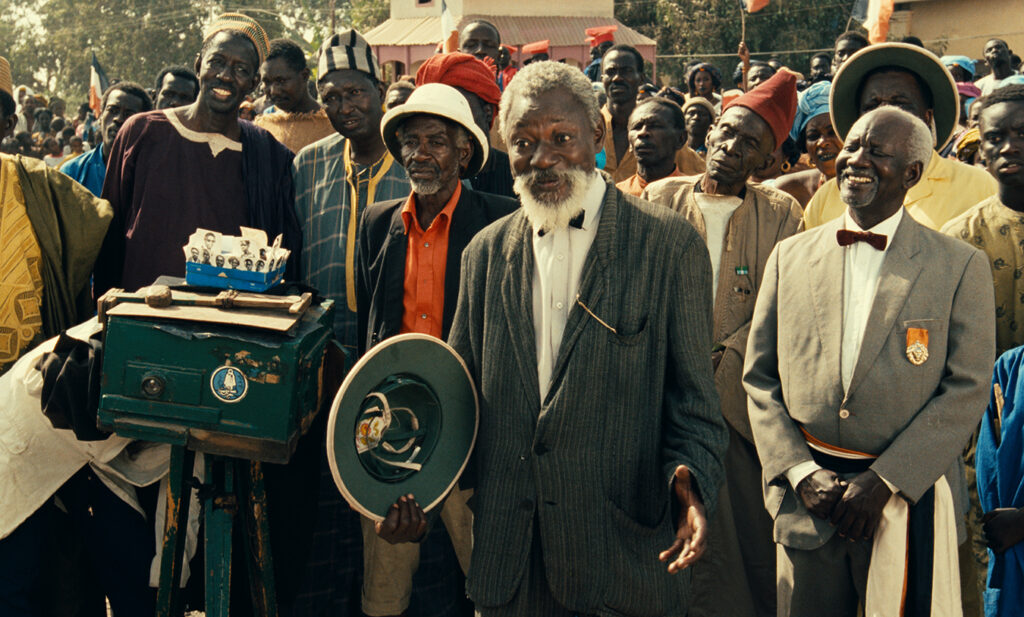
Linguère Ramatou returns to Colobane, a once charming village now devastated by poverty, with fabulous wealth and a promise to save her people. But tied to this promise is a deadly bargain: the lover who had betrayed a 16-year- old, pregnant Linguère, must be executed. The villagers—over time and through the hardship of daily survival—had long forgotten the incident, and they are at once confused, horrified and outraged. But soon cowardice sets in, shrouded in silence. While appearing to maintain a good moral conscience, the villagers are unable to resist the dazzling array of consumer goods that Linguère has now placed within their reach. On credit, they begin to purchase furniture and appliances—even those meant for houses without electricity!

Completed just a few years before the filmmaker’s passing, Hyenas is a cautionary tale packed with humorous, compassionate yet explosive scenes. Mambéty forges his narrative with humour and paints characters, spaces, dialogues and gestures with breath-taking images in sumptuous colours. He skilfully and playfully sways us back and forth in time, with slots of 19th century pomp followed by 20th century appliances. Desire, materialism and various modern day artefacts come to test the old values of individual dignity and group solidarity, stressing the enduring, almost mythic status of the conflict between avarice and respectability. Hyenas is nothing short of poetry in motion.

Introduced by artist and researcher Layla Gaye

Run Time

113 mins
More Info
22 September 2018

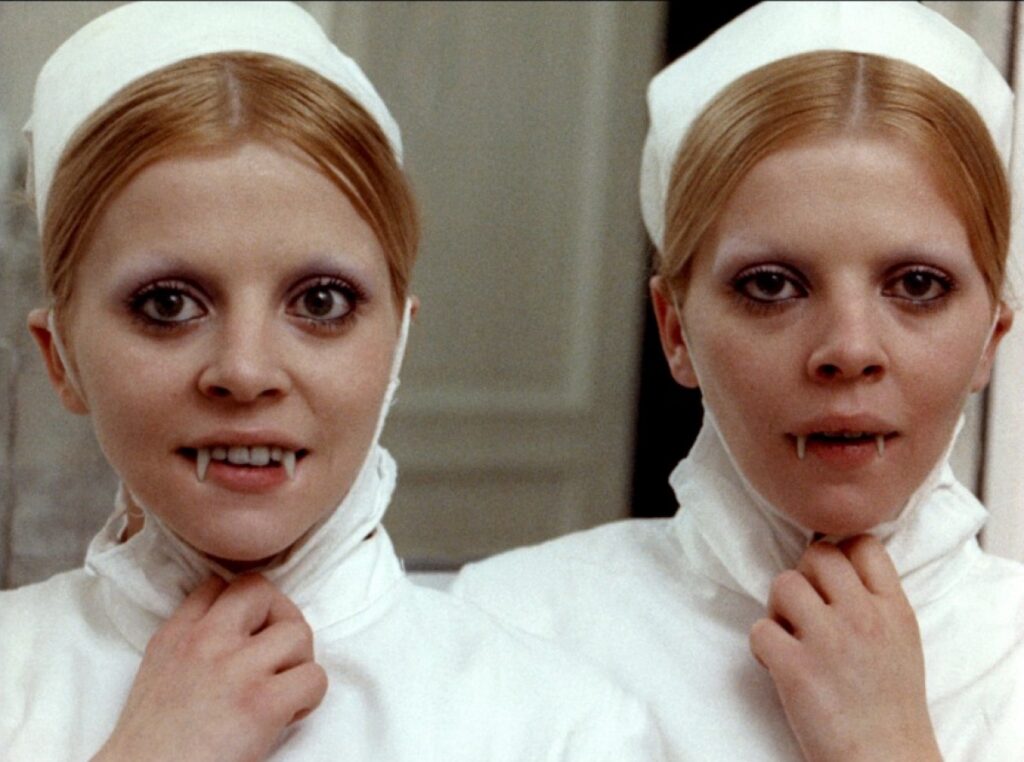
Frederic is a maternally-dominated young man who by chance is awakened to a dormant childhood memory while attending the launch party of a new perfume. A chateau pictured in the perfume’s poster reminds him of a night, long ago, when he was lost and a beautiful young woman came out of nowhere to protect him through the night. Later, the woman—unaged—magically appears and beckons to him, and Frederic finds his way back to the chateau and to her, uncovering some dark secrets about his family’s past along the way.

Lips of Blood was French horror-erotica auteur Jean Rollin’s favorite of his own films and it contains many of his signature elements: crumbling seaside ruins, bloodthirsty vampires, poetically haunting cinematography and suspenseful intrigue. Of all his films, it perhaps best transcends his tendencies toward the poetical and arcane, while remaining at the same time true to his most personal, recurring obsessions: childhood, nostalgia, lost love, romantic quests, the cinema, obsolescence. Aided by a young Jean-François Robin, whose later talents as a cinematographer would spice up films in the 1980s by Jacques Demy and Andrzej Żuławski, as well as the Cinéma du look classic Betty Blue, Lips of Blood is one of Rollin’s most beautiful works.

Selected by Artist in Profile Sophia-Al Maria, who will introduce the film

Run Time

88 mins
More Info
23 September 2018

Some Interviews on Personal Matters is one of the first feminist films of Soviet cinema and comes to Berwick freshly restored by Arsenal Berlin. Lana Gogoberidze’s narrative follows Sofiko, a journalist who interviews a wide range of women about their lives, desires and domestic labour. Laying bare the connections between the private and political in almost documentary style, the film focuses on the struggle between Sofiko’s independence and her obligations towards her own family. A powerful performance by Sofiko Chiaureli—who viewers will recognize from her iconic role in Sergei Parajanov’s The Colour of Pomegranates—is at the center of what is a quite personal film for Lana Gogoberidze, one of three generations of Georgian women filmmakers from her mother Nutsa Gogoberidze (an associate of Eisenstein, Dovzhenko and Mikhail Kalatozov in the 1930s) to her daughter Salome Alexi.

Run Time

95 mins
More Info
22 September 2018

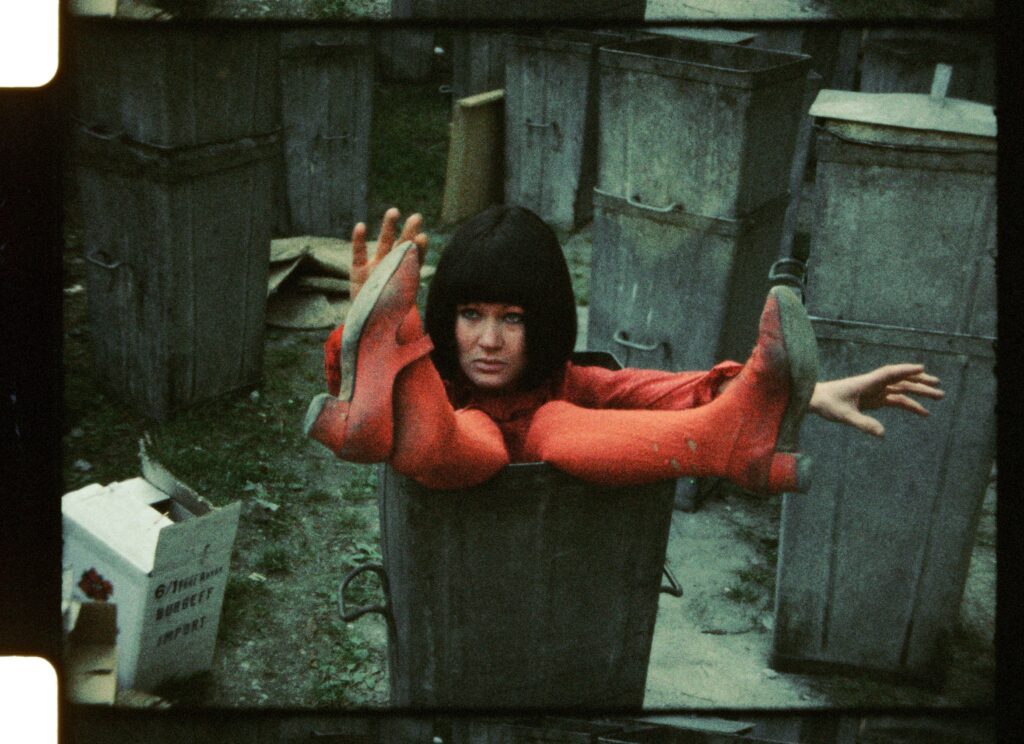
BFMAF presents the first UK screening in 40 years of this innovative New German Cinema highlight. The Dumpster Kid (Kristine de Loup), born from a trash can, finds her way through the world, discovering hilarity, ecstasy, cruelty, capitalism and patriarchy along the way. Always wearing a red dress, red tights and Louise Brooks-style black bob, The Dumpster Kid steals, has sex, joins a sideshow and meets Al Capone and d’Artagnan. She is always in danger, yet immortal.

This radical film was never meant to be shown in a cinema; instead, Reitz and Stöckl showed it in pubs. The audience members were encouraged to imbibe heartily and create their own sequence of the film’s 22 episodes. This special ‘pub cinema’ screening will be recreated for this event, an exceedingly rare cinematic treat that you won’t soon forget.

Supported by Goethe-Institut, London

Run Time

208 mins
More Info