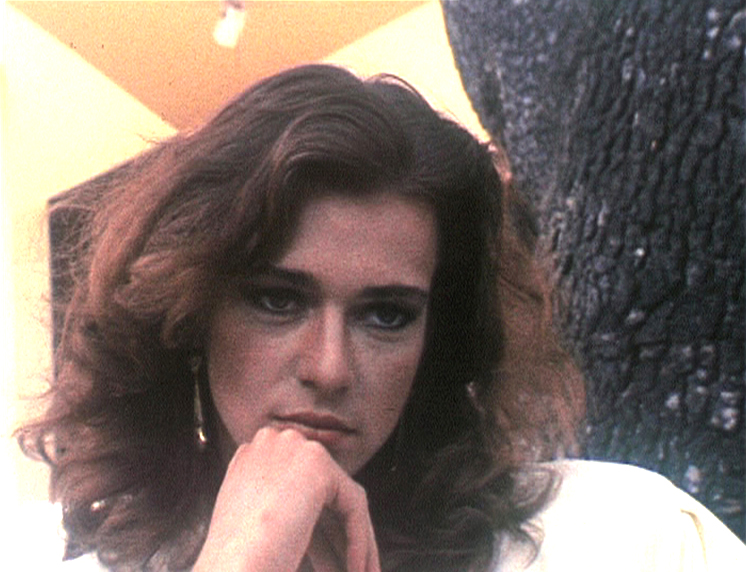
The episodically connected lives of four college friends unfold throughout the incipient martial law years, as they struggle to define their sexual and professional desires and how best to attain them. An observational drama that does not shy away from topics such as abortion, prostitution, patriarchy, homosexuality, military violence and the repressive social conditioning of collective imaginaries, this understated feminist inquiry into the possibilities of sustaining queer kinships stands out as a singular achievement of woman-centred Philippine cinema. — Letitia Calin
Programmes
The Little Girl Who Sold the Sun follows Sili, a girl traversing Dakar’s many obstacles with her crutches. After starting to work as a newspaper vendor, she quickly runs afoul of territorial boys who see her as a competitor. Djibril Diop Mambéty’s final film is handled with gentle lightness and grace, providing incontrovertible evidence of his place not only as a master of African cinema, but as a pivotal figure in the history of cinema. — Herb Shellenberger
Aura Satz presents the UK premiere of her film Preemptive Listening (Part 1: The Fork in the Road) and discusses her wider research on sonic obedience and disobedience through the trope of the siren. Her project proposes a speculative re-imagining of emergency signals—it posits the siren’s loud glissando wail as a conditioned and learned signal, one that can potentially be productively rewired.
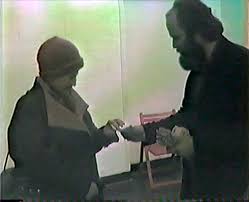
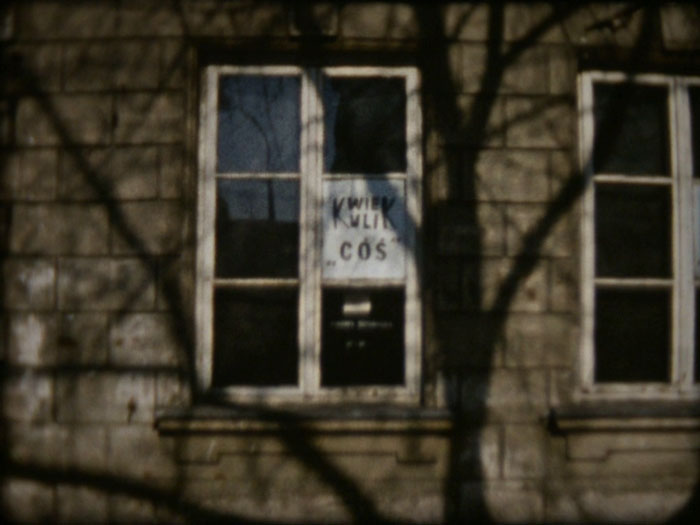
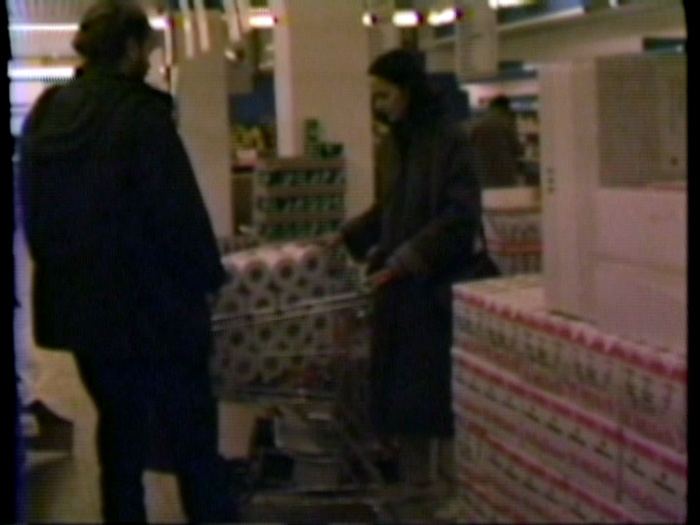
Interleaving the archive (Group Action with KK) is a performative lecture by Holly Argent that brings together a spoken semi-fictive narrative, photographic transparents on an overhead projector, a live video-feed projection and a screening of a number of films by Polish artist duo KwieKulik (Przemyslaw Kwiek and Zofia Kulik). Also known as KK, the duo were making work in Warsaw, Poland between 1971–87. Their political and often ephemeral work attempted to expose their situation as artists working under communist rule in the People’s Republic of Poland.
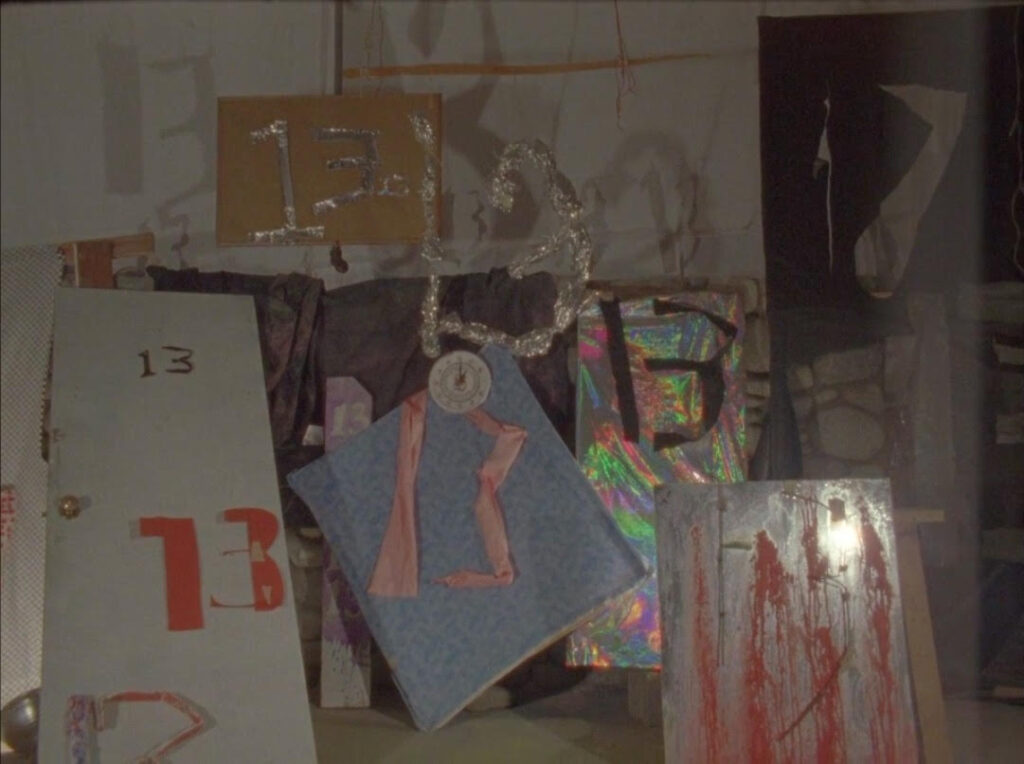
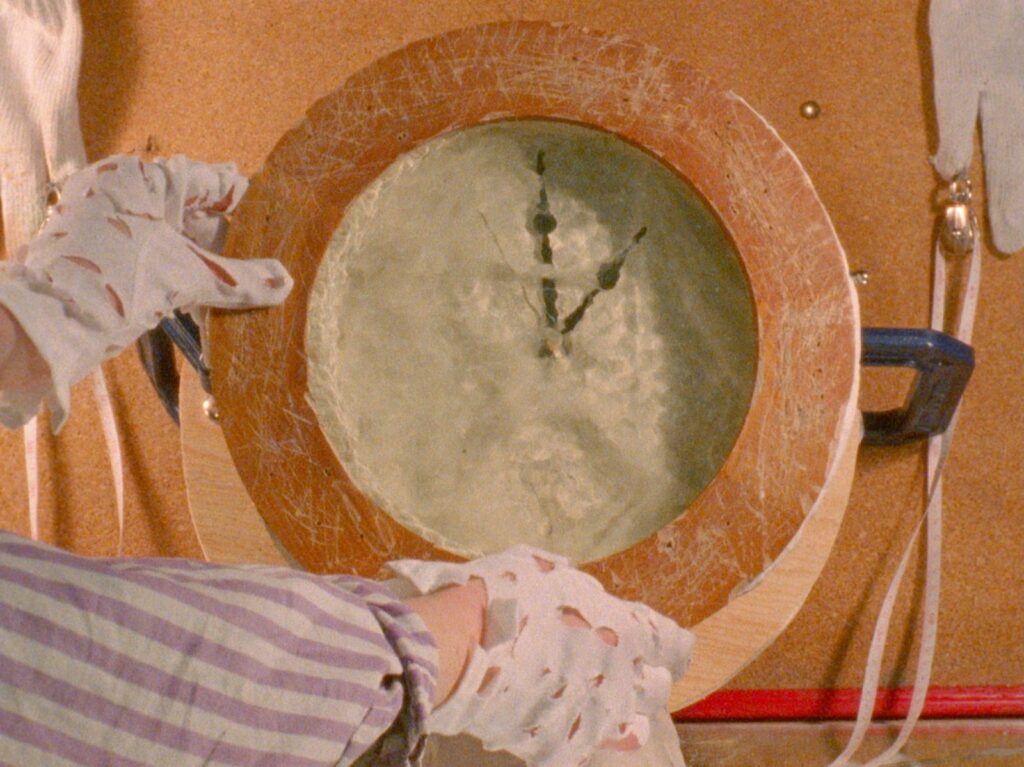
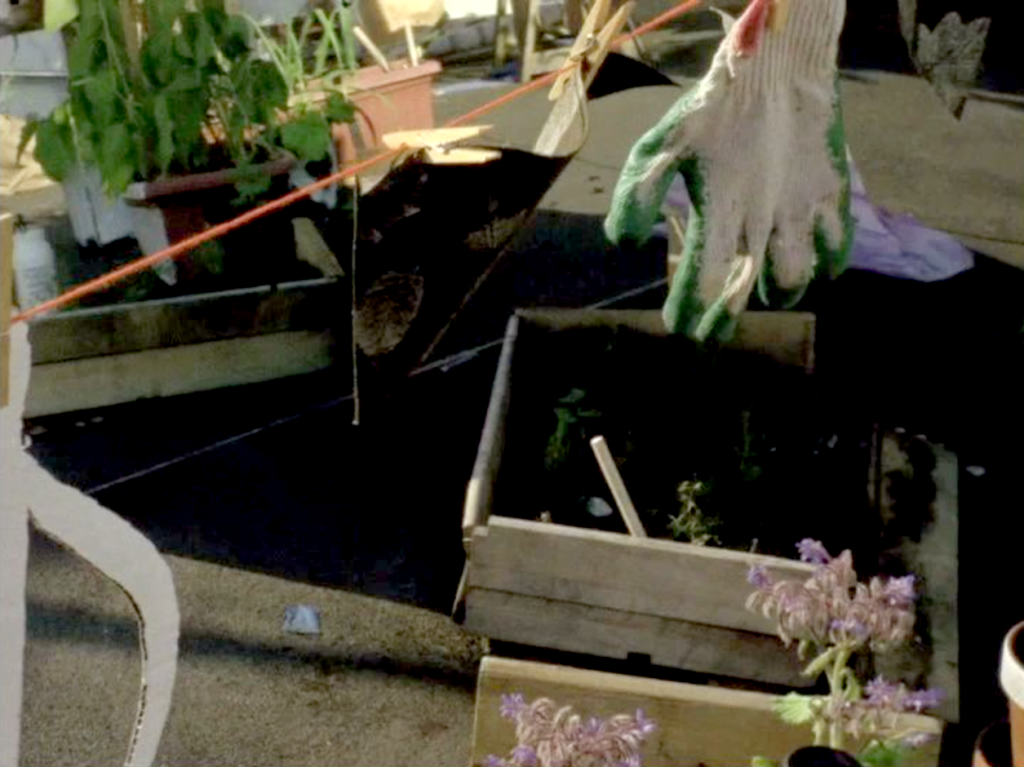
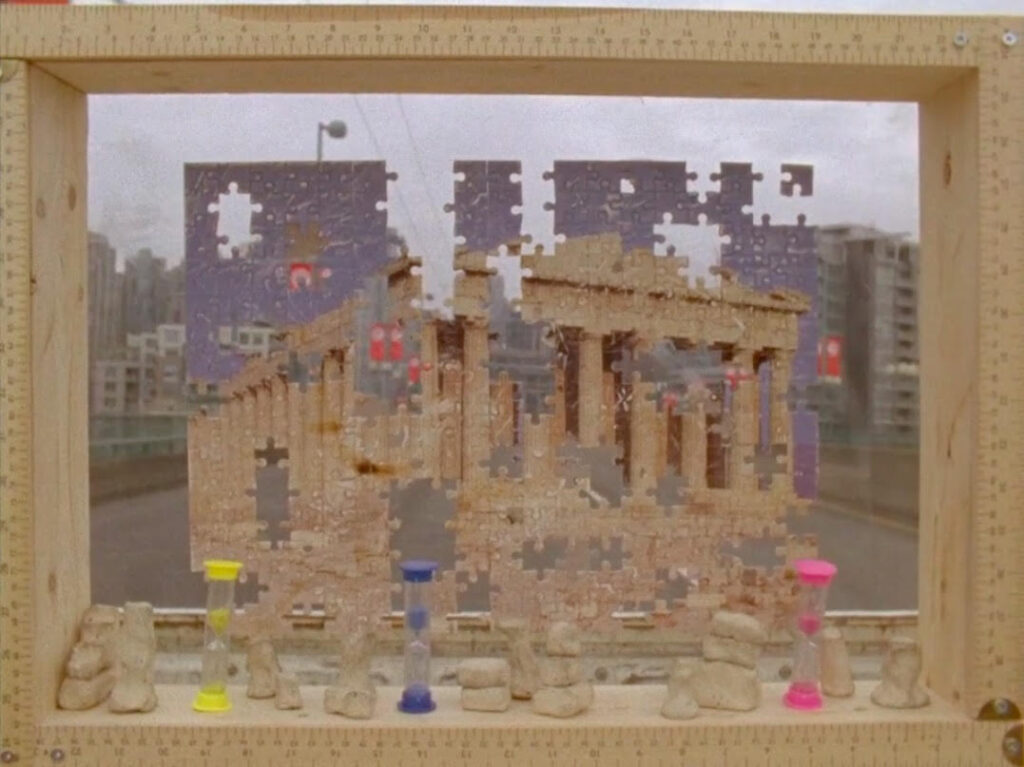
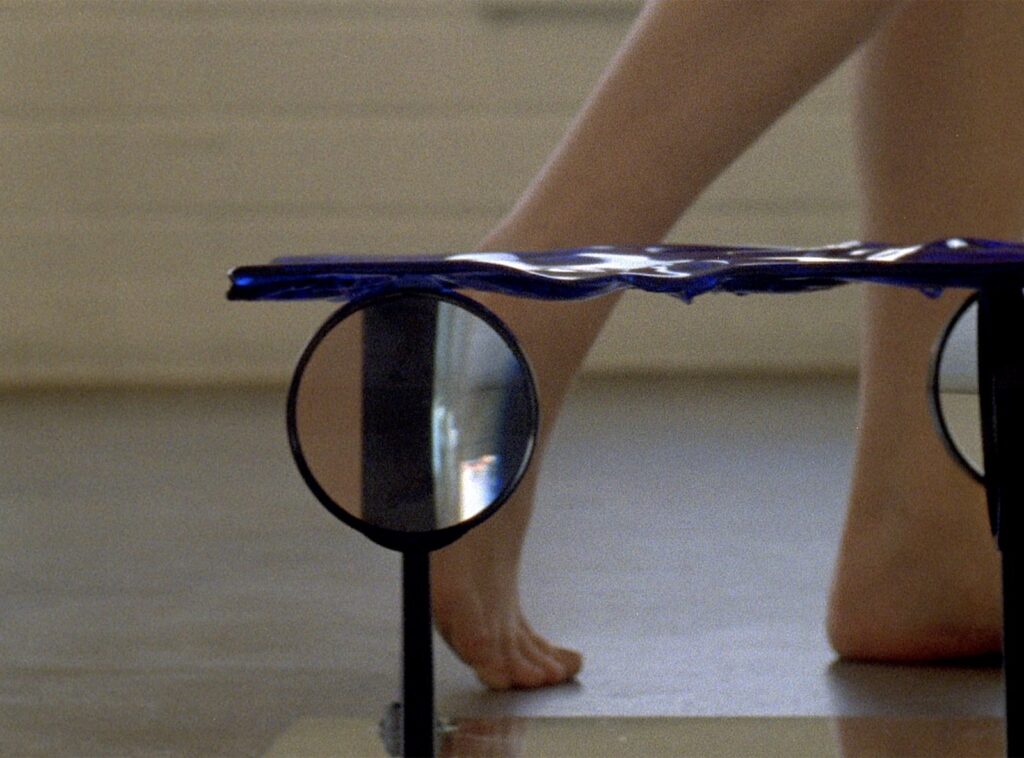
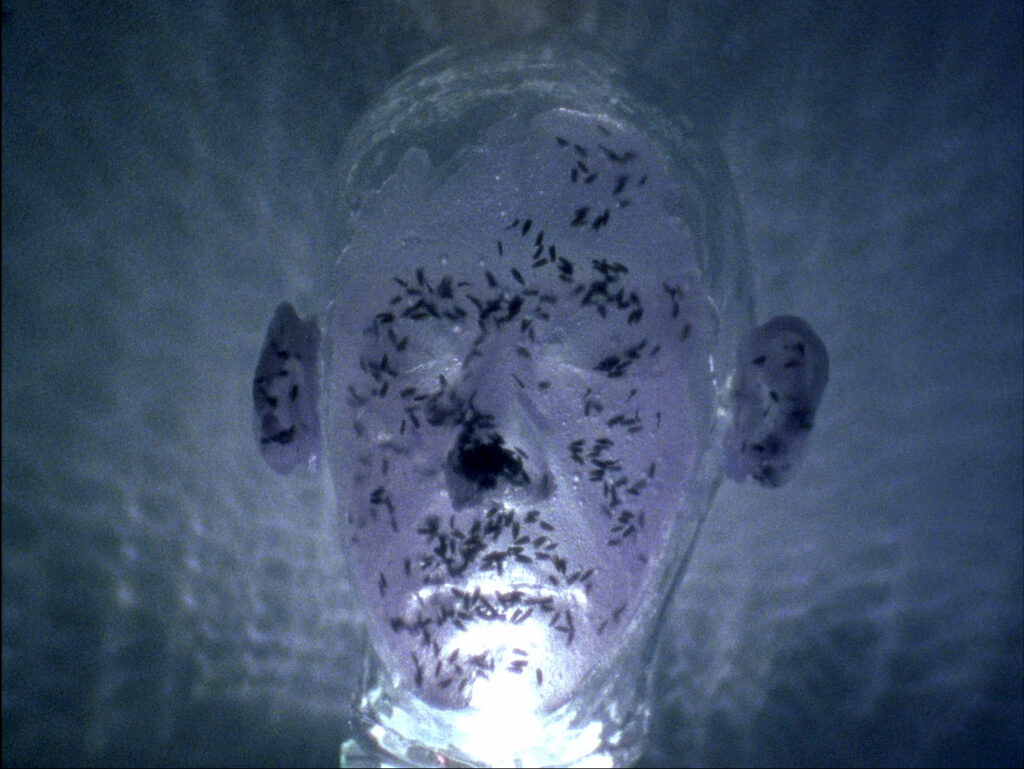
Steffanie Ling (Artistic Director, Images Festival) presents Broken Clocks, a selectrospective of Vancouver-based artist Kasper Feyrer’s 16mm films originally shown as installations. By filming their sculptures as props, and the gallery installation as set, each exhibition seeps into the next, creating the causes and conditions for the next film to germinate. Feyrer’s use of ‘practical film effects’—such as physical objects and non-digital special effects made for the verisimilitude of the camera—fashion a world of techniques and materials designed to mirror our own without the pretext of permanence.
Q&A with filmmaker Kasper Feyrer
Co-presented with Images Festival
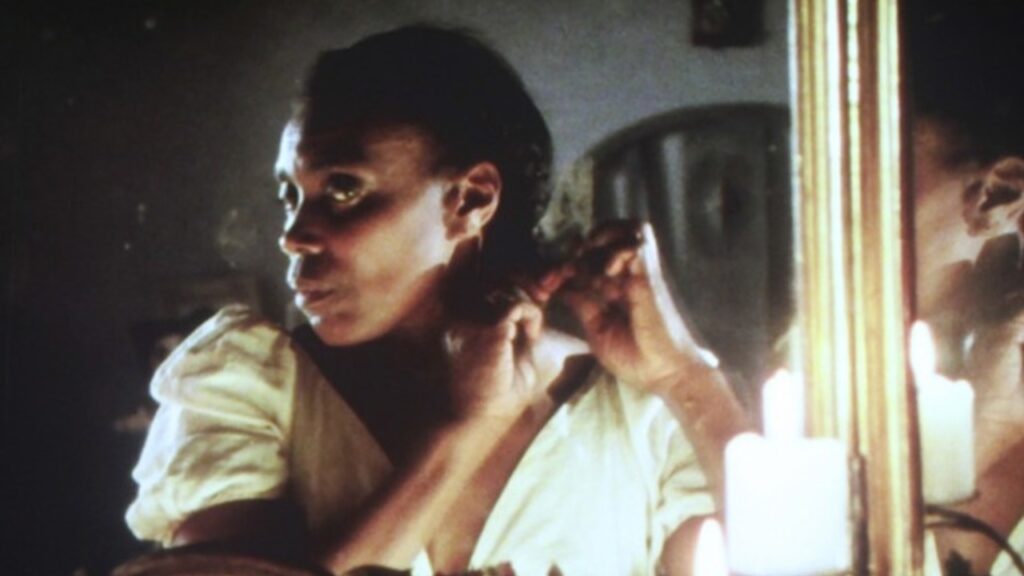
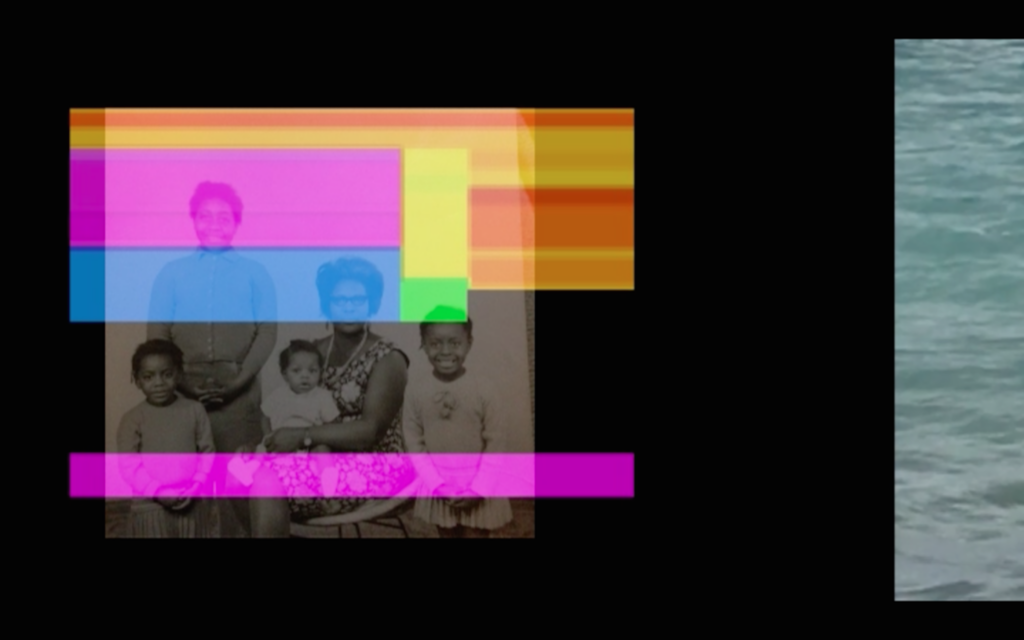
This screening and conversation, programmed by Rabz Lansiquot, pairs dancer Zinzi Minott’s durational film works Fi Dem (2018) and Fi Dem II (2019) with Judah Attille’s Sankofa Film & Video Collective-produced Dreaming Rivers (1988) to consider lineages of Black British experimental film.
Q&A with Zinzi Minott
This programme is supported by the Independent Cinema Office as part of a forthcoming project with LUX celebrating films made in and around the Black British film workshops of the 1980s
Cinématon is a major film work composed by Gérard Courant since 1978. The film consists of silent, three-and-a-half minute portraits of artistic and cultural personalities, numbering over 3,000 to date. The person being filmed can do whatever she/he wants. Taken together, they constitute an archive of international art, film, theatre and entertainment scenes of the past four decades. Jean-Luc Godard, Julie Delpy, Terry Gilliam, Babette Mangolte and Sergei Parajanov star alongside a cast of thousands.
Supported by Northumberland Cultural Fund and ‘Welcome Visitor’ Project
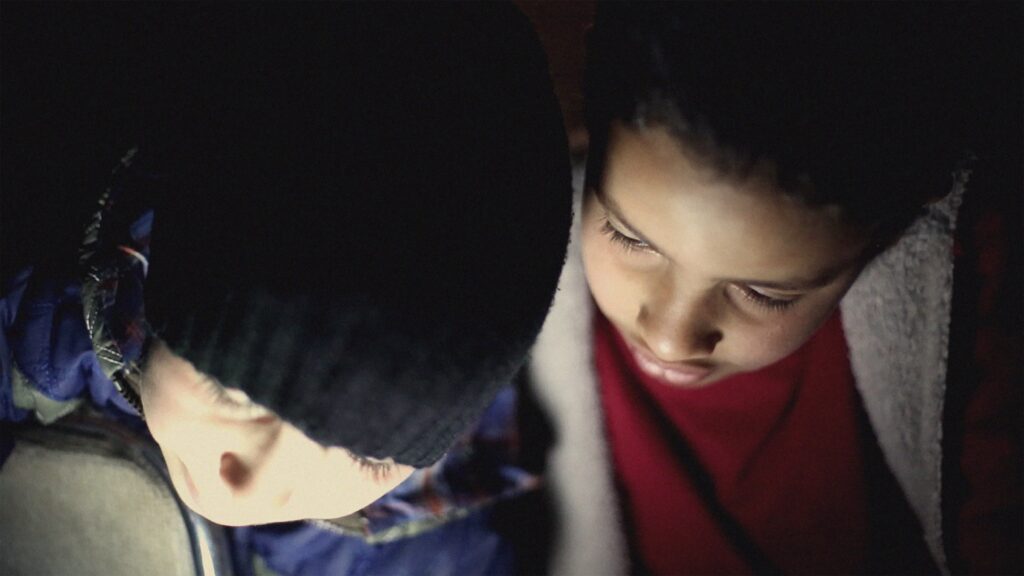
Tim Alsiofi’s unflinching document of people sheltering in a city under siege reaffirms the importance of transparency and immediacy in documenting crucially important scenes of unfolding history through moving images.
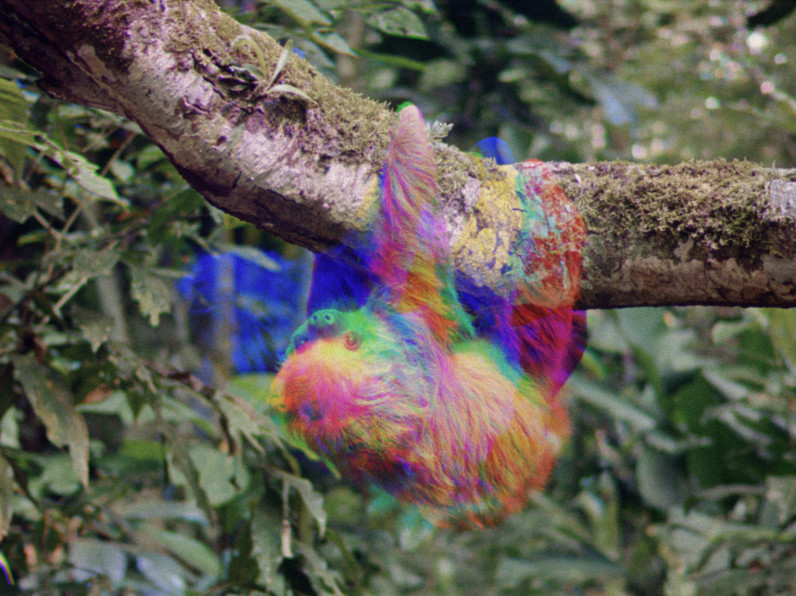
Ben Rivers’ magnificent film of a sloth doesn’t encourage lazy viewing. Rather, it’s an active, engaging and engrossing experience. Time becomes suspended as each breath, every movement becomes a theatrical drama unfolding before our eyes. Perhaps implicitly poking fun at the term ‘slow cinema’, Rivers instead gives us an exquisite example of ‘sloth cinema’.
O’ Pierrot treads the stock, pantomime narra- tive of Pierrot the Clown, told this time from a lesbian, mixed-race, British perspective. The quest for British identity, so often played out in too-real grey-scale is here translated in glowing colour via 8mm stock.
Commissioned by The New Flesh as part of the 2019 residency programme, using public funding from Arts Council England