
Films by Steve Reinke, Onyeka Igwe, Rajee Samarasinghe and Ja’Tovia Gary
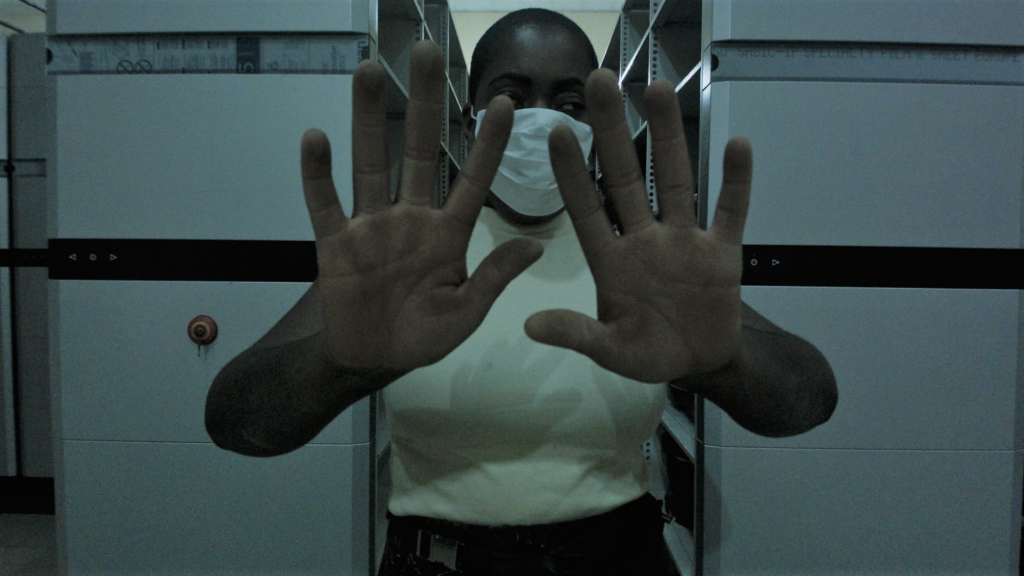
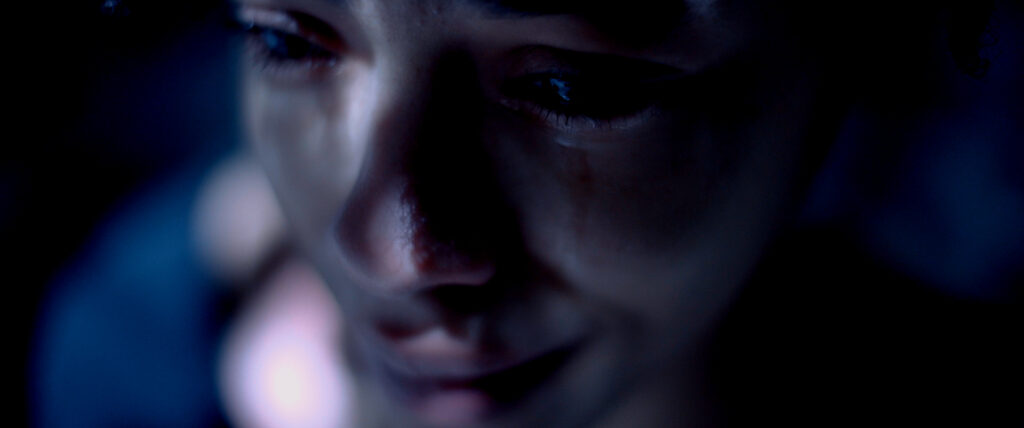
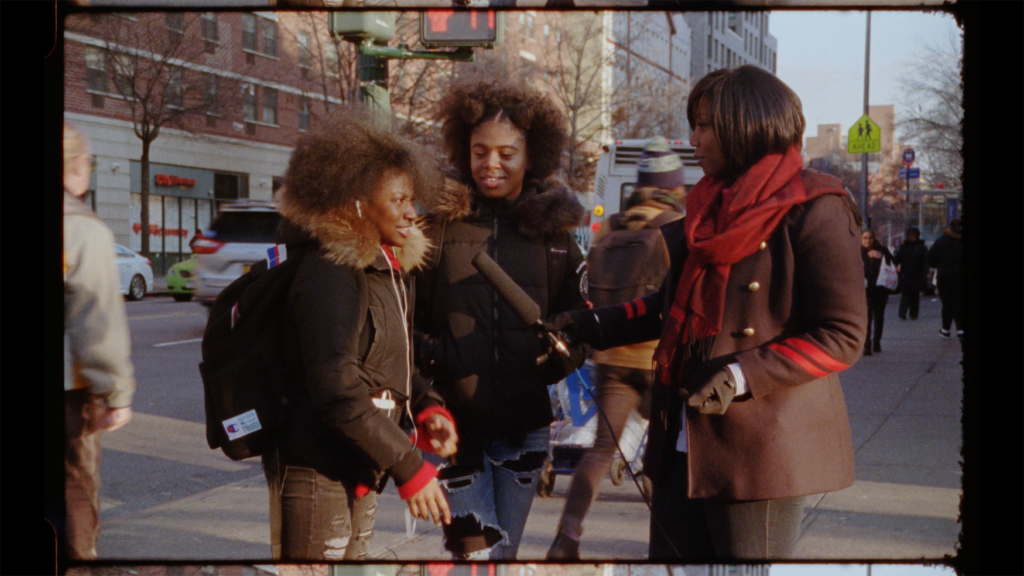
From Harlem to Giverny, patrilineal tales to Artaud, nature will give way to febrile artifice. What dizzying force is this—throwing us between opposites: deafening silence vs. slide-projector clicks; glitch-y celluloid vs. HD; projected futures pressed up against the archive? But there’s calm around the corner—a reprieve from the chaos of subjection. “Can I live?”, one voice enquires, rhetorically. Consider how the subtext to our fervid biopolitical project.
Q&A with filmmakers Steve Reinke and Onyeka Igwe
Run Time
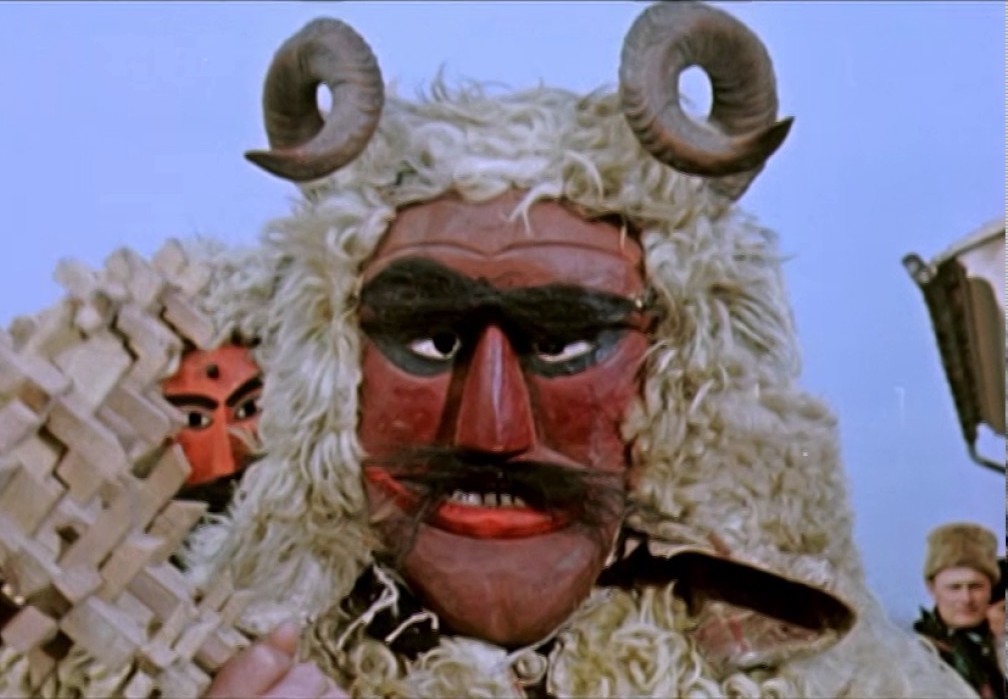
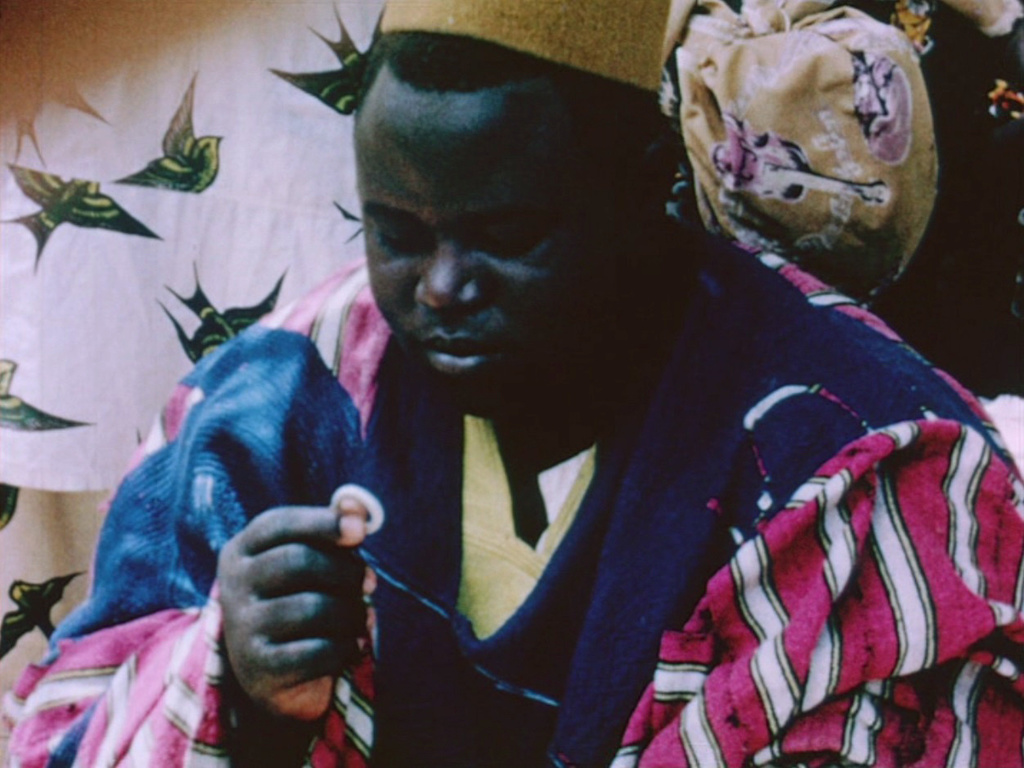
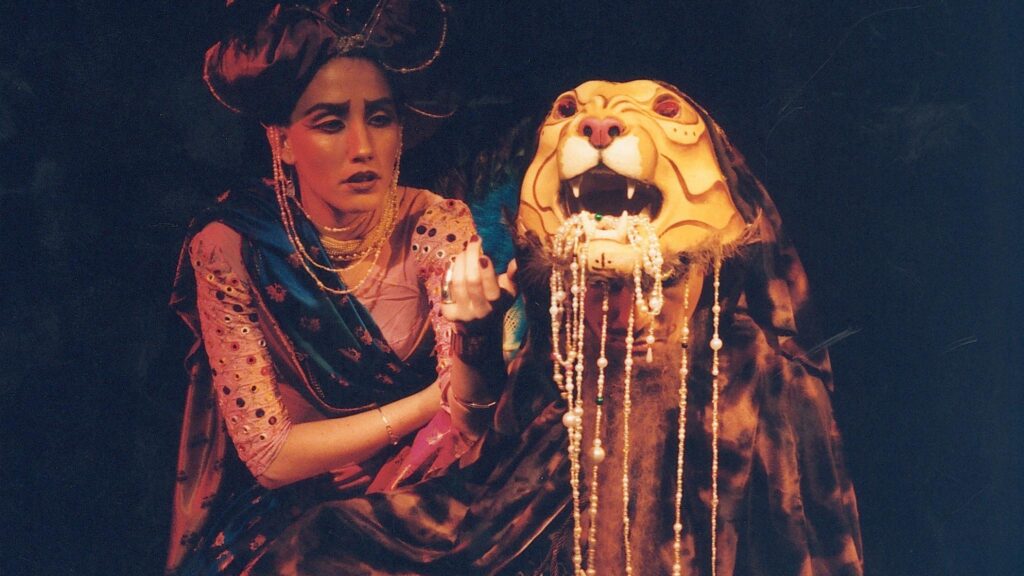
This shorts programme looks at filmmakers cinematically adapting folkloric legends from their own cultures. Busójáráskor is an ethnographic documentary on the Hungarian celebration of Busójárás, in which people dress as horned monsters with carved wooden masks. Nigerien filmmaker Moustapha Alassane’s The Ring of King Koda adapts a Zarma legend in which a king tests the loyalty of a fisherman. Nana Tchitchoua’s Impressions from Rustaveli melds the Georgian medieval poet’s writings with the cinematic language of Sergei Parajanov and Jack Smith.
Run Time


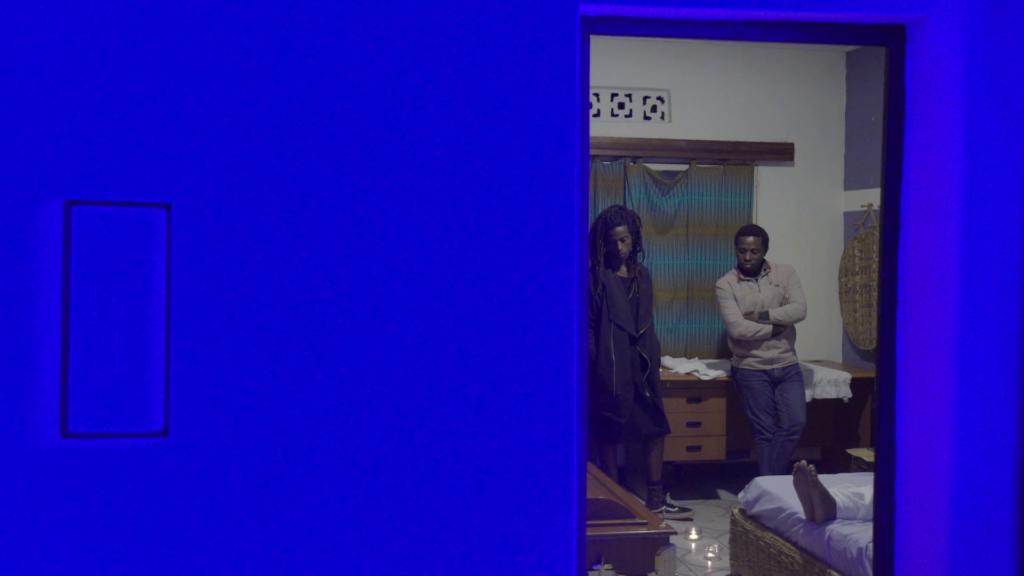
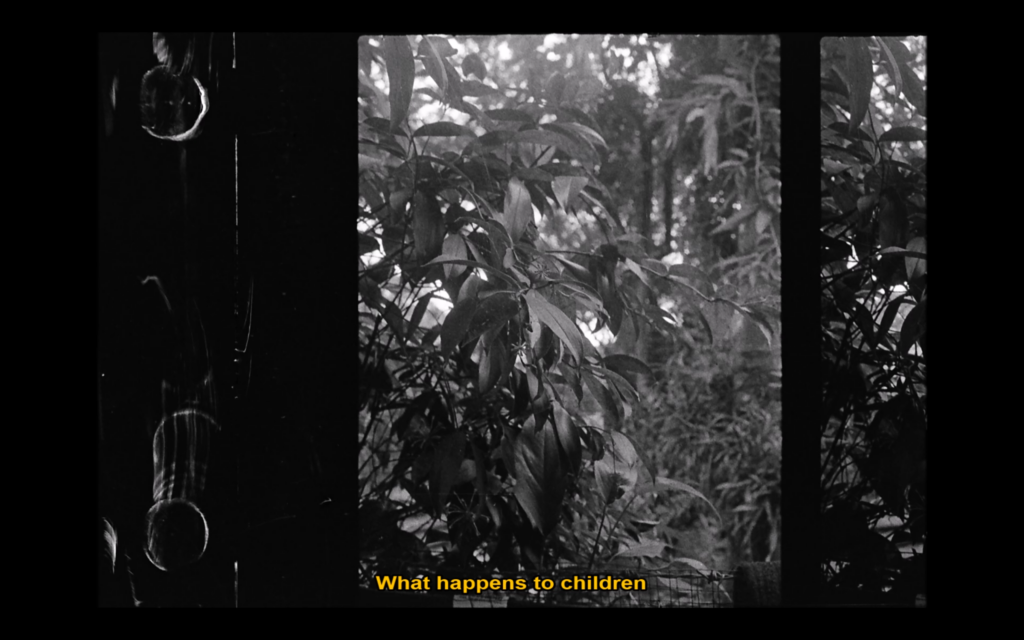
Films by Deborah Stratman, Patrick Staff, Philbert Aimé Mbabazi Sharangabo, Lesley-Anne Cao, Chema García Ibarra & Ion de Sosa
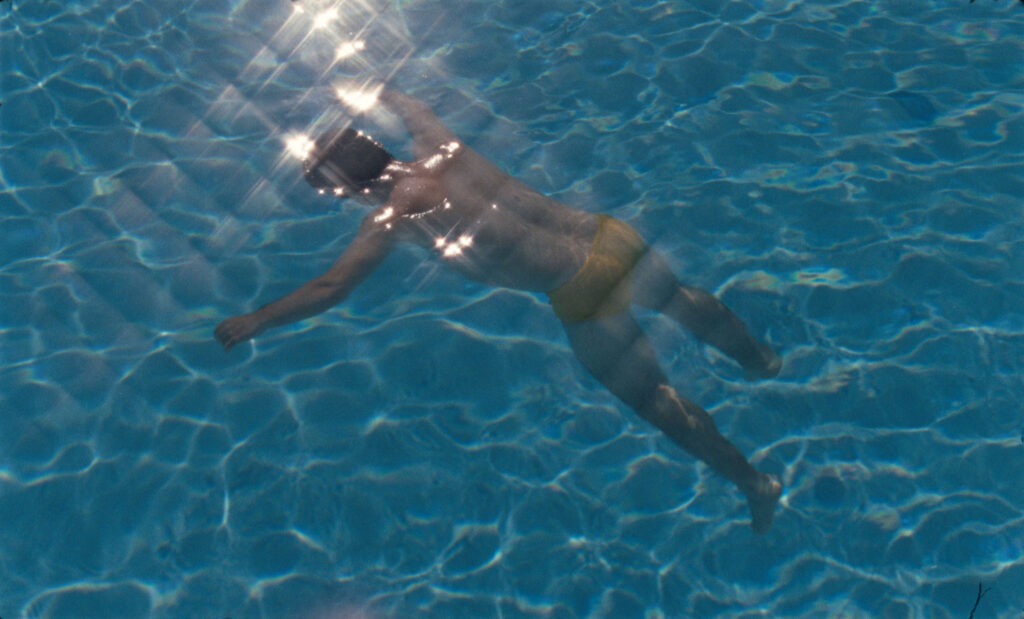
‘Lazy Girl’ is an emblem of refusal. Like Hammer and Deren she moves to her own rhythm, turning resistance into art. So did Eric, a singular figure whose “proto-practice” was poetry—but he ran out of time. Marx said all politics reduces itself to the politics of time; too bad this leisurely splash in Montánchez is hardly a refusal of capitalism’s tempo but let’s kill time before it kills us.
Run Time
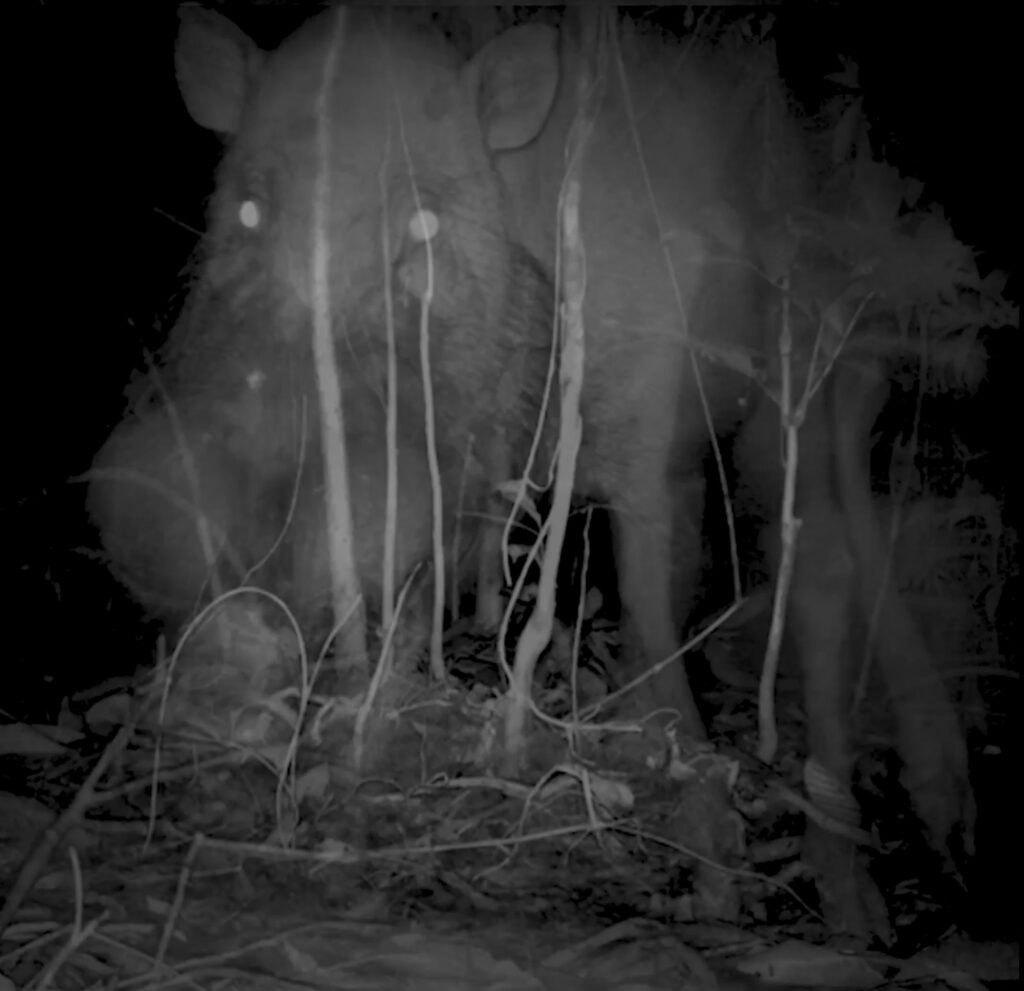
Camera Trap is a comparative video using moving images made a hundred years apart.

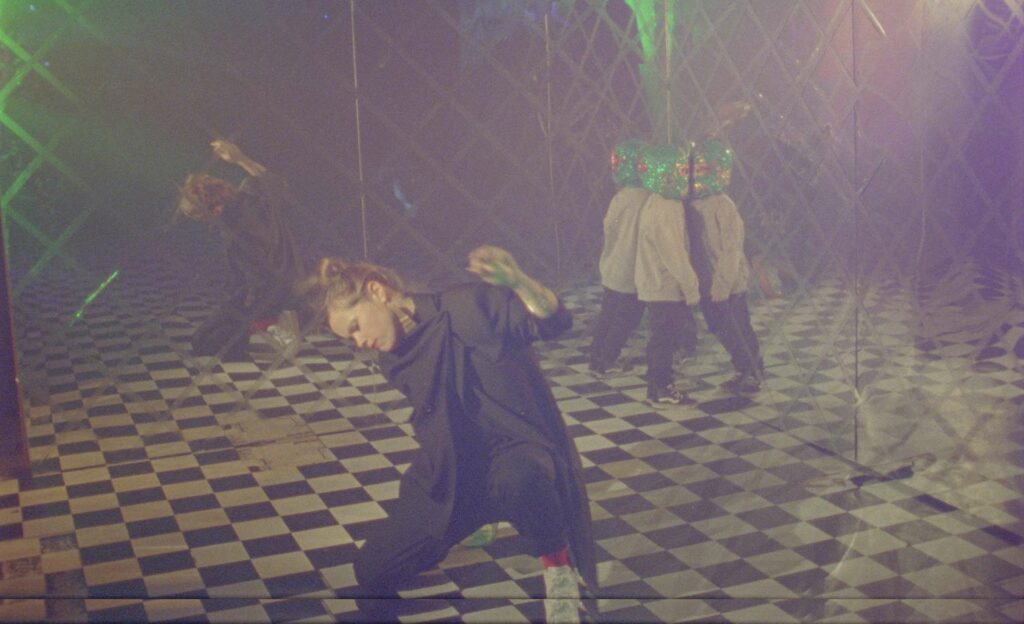

Glittering and shimmering moments: the tender touch of your child; the lumbering gait of a dancer dressed in an improbable costume; the luxury of a well-earned day off work. These glances, snapshots and memories are bound together in films alternating between the mundane and fantastic.
Q&A with filmmaker Beatrice Gibson
Run Time

Artist-filmmaker Jessica Sarah Rinland presents the world premiere of her film Black Pond, a film that explores the activity within a common land in the south of England. Previously occupied by the 17th century agrarian socialists The Diggers, the land is currently inhabited by a Natural History Society whose occupations include bat and moth trapping, mycology, tree measuring and botanical walks.
After two years of filming on the land, the footage was shown to the members of the Society. Their memories and responses were recorded and subsequently used as part of the film’s narration. The film does not offer a comprehensive record of the history of humans within the area. Instead, it explores more intimately, human’s relationship with and within land and nature.
Following the film, Rinland will dissect and expose materials related to the film, detailing content from a forthcoming publication related to the film. She will stage moments from the Society’s yearly town hall meetings, discuss historical maps and laws, letters of complaint and footage she shot in the same location years before her encounter with them.
Run Time
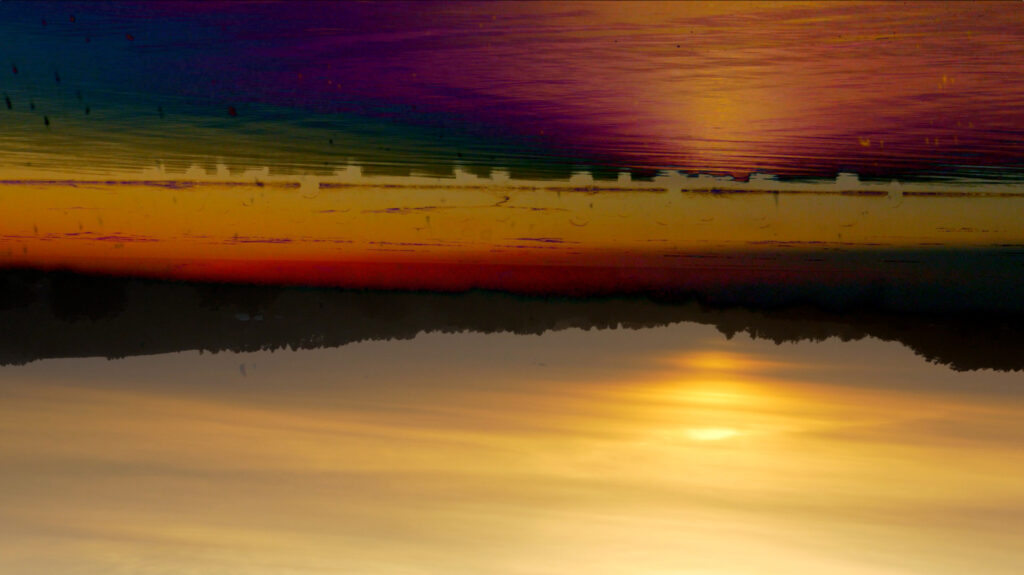
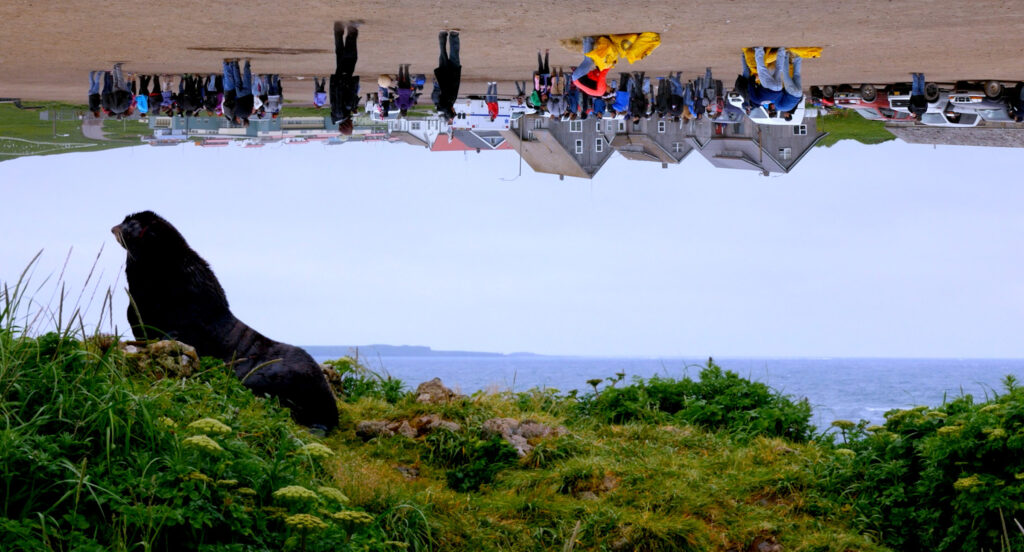
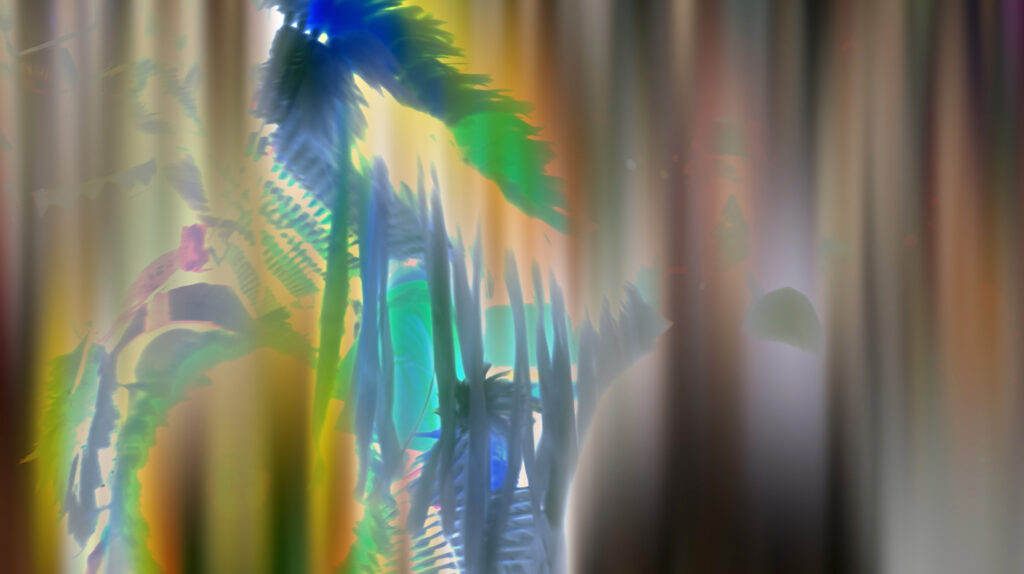
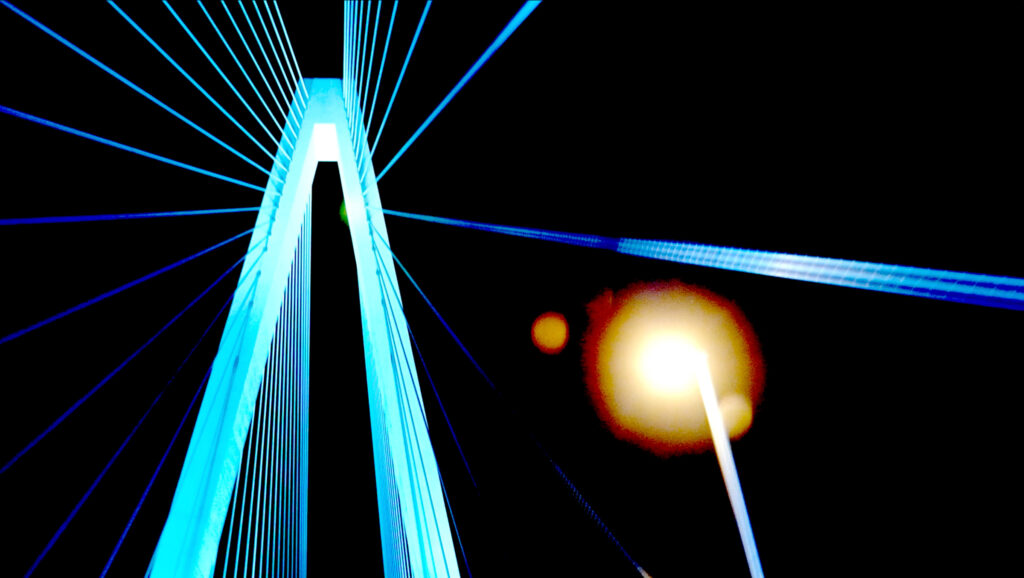

Filmmaker Sky Hopinka presents a screening of his short films in conversation with Nicole Yip, Director of LUX Scotland. Based in Milwaukee, Sky Hopinka (Ho-Chunk/Pechanga) focuses on the interconnections between his indigenous homeland, language, landscapes, and identity. Anchored by both surreal perspectives and grounded realities, Hopinka’s sublime films create maps of dreams and memories, pushing against cultural and personal boundaries, creating meaning where none had existed before.
Hopinka will read from his debut publication Around the Edge of Encircling Lake (2018) and the screening will include:
Kunįkága Remembers Red Banks, Kunįkága Remembers the Welcome Song, 2014, US, 9 mins
Jáaji Approx, 2015, US, 15 mins
I’ll Remember You as You Were, Not as What You’ll Become, 2016, US, 12 mins
Dislocation Blues, 2017, US, 17 mins
Fainting Spells, 2018, US, 12 mins
Special thanks to Ruth Hodgins, Walker Art Center
Run Time
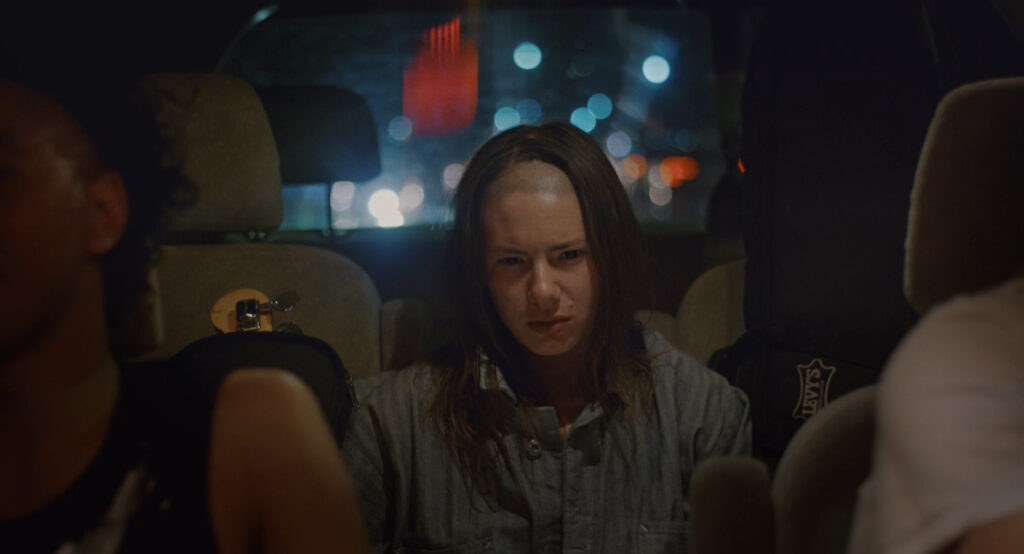
Empty Metal takes place in a world similar to ours—one of mass surveillance, pervasive policing, and increasing individual apathy. The lives of several people, each inhabiting poles of American social and political consciousness, weave together as each attempts to achieve some kind of forward motion, sometimes in contradiction, and always under the eye of more controlling powers.
A taut thriller, the film reveals a political fantasy, an alternative reality whose characters teeter on the dull knife edge that is contemporary American politics, at the same time refusing to fall right of left. Instead, they lash out from the soul, under the radar, in an attempt to achieve what their mainstream predecessors have yet to accomplish.
“Filled with energy, rage, and the smallest measure of hope, Empty Metal is a new kind of political film for these extraordinary times.” —Film Society of Lincoln Center
Q&A with filmmakers Adam Khalil & Bayley Sweitzer
Run Time

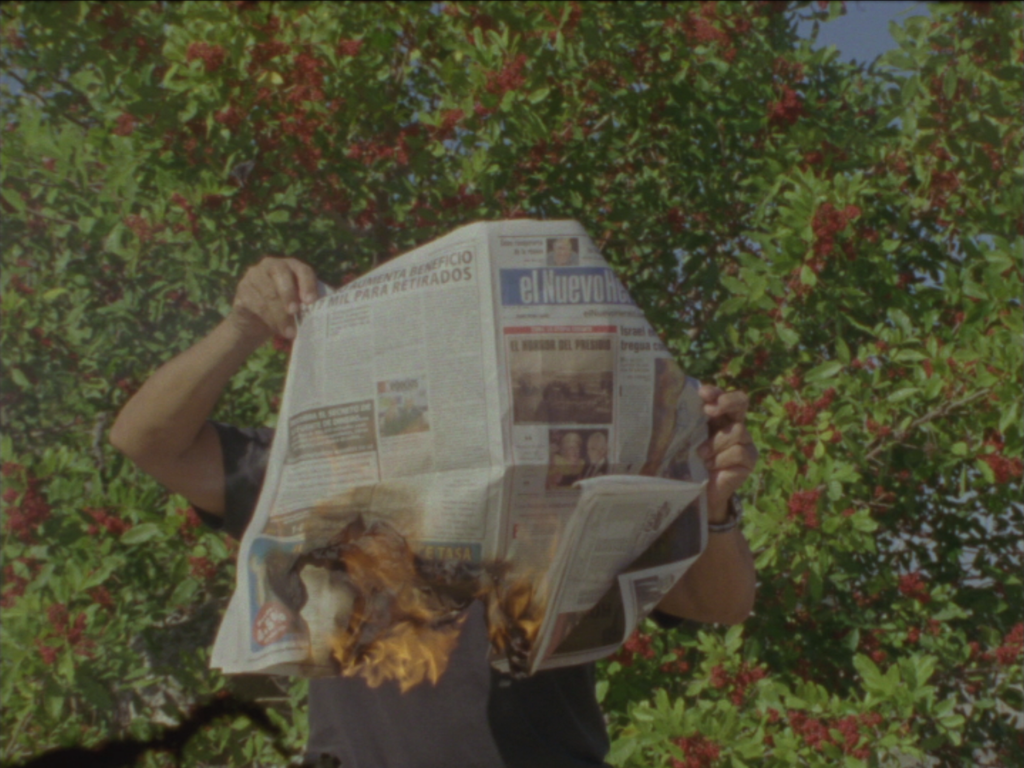
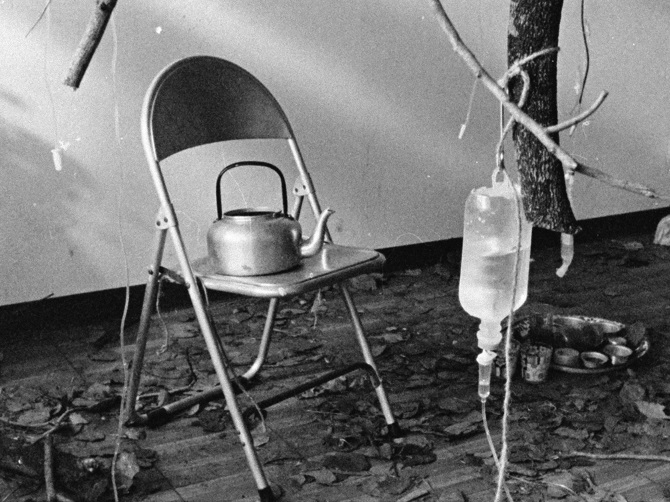
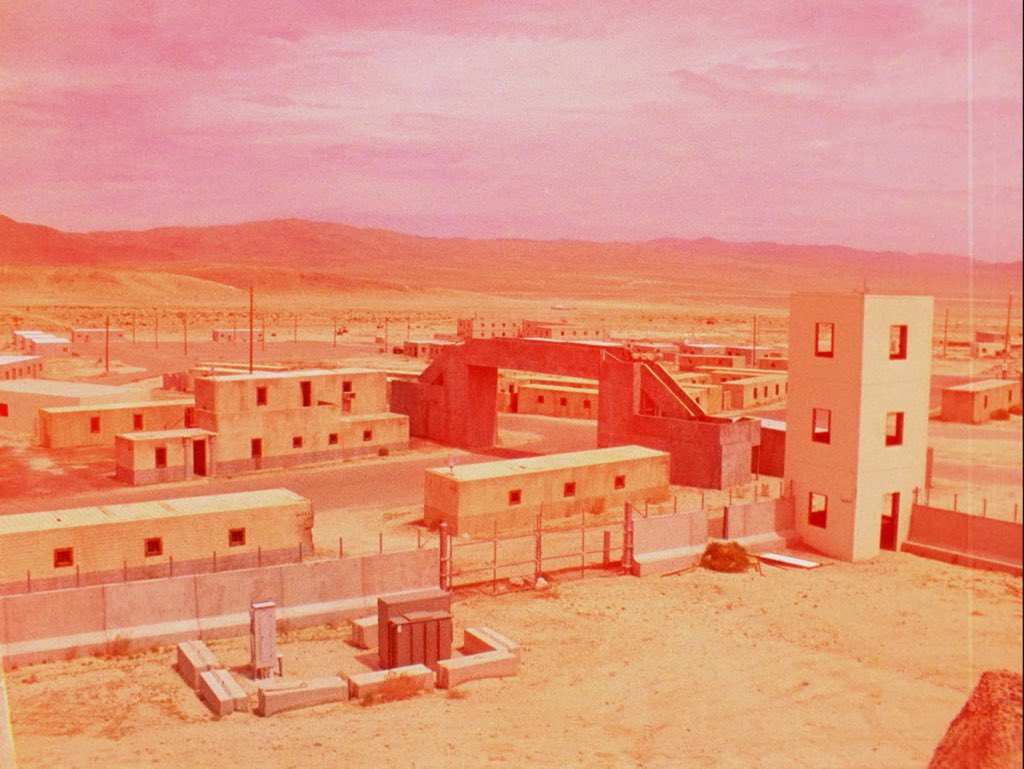
Shine bright. Portraits of a nomadic musician and an animatedly-perverse single father butt up against a simulacrum of the Middle East and a tactile inquiry into the natural world. Taken together, expressions of personal, political, spiritual, mystical and sexual agency provide powerful statements of either resistance to or complicity in an increasingly commodified world.
Run Time
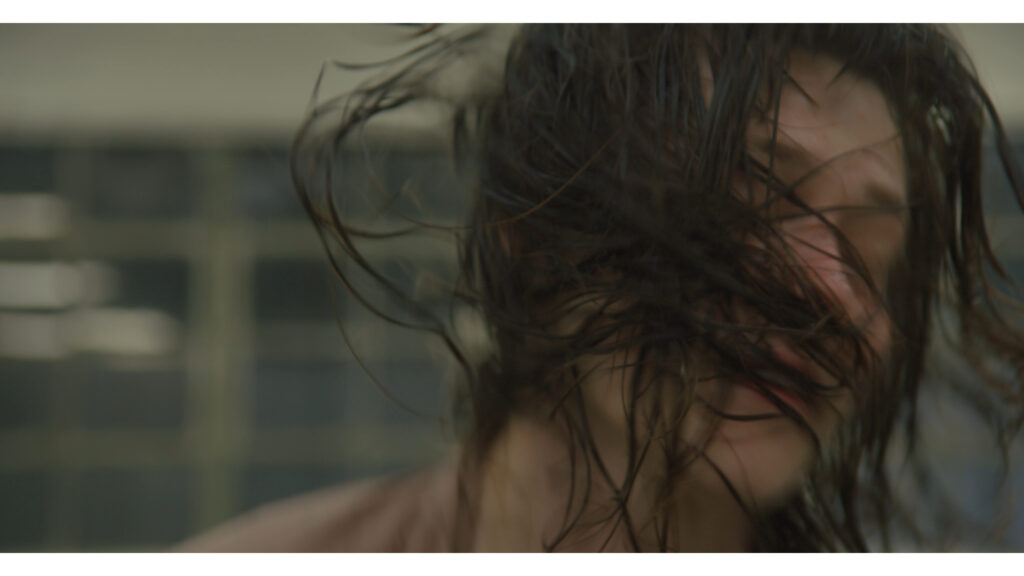
Bathing explores themes of contamination, cleanliness, and debility through performance and dance. It is an adaptation of a performance Staff developed that features a solo performer moving in and out of a shallow basin of water. Between the performer’s movements, the video intersperses images of oil, spit, fluid landscapes, and U.S. border patrol, with flashes of a dog lost to a blissful state of chaos.
The work draws on Staff’s research into the classical figure of the bather, chemical effects, drunken revelry, and the spiritello figures that commonly adorn European fountains. The performer’s continuous actions and gestures eventually lead to overexertion of the body. A fluid cross-contamination between substance, performer, and image occurs, bringing to mind the ways in which bodies absorb and release chemicals, hormones, and other agents—a means of survival for some and potentially lethal for others.
The video embraces feelings of anxiety induced by stagnant water and its pollution, while expressing ambivalence about the supposed opposition between inebriation and good health, suggesting that states of intoxication may be compared to a queer mode of being. However, while offering the toxic as a possible source of liberation from conservative notions of well-being and capacity, Bathing also asks us to consider the inherent privilege in celebrating states of disorder and from whom those privileges are commonly withheld.

A conversation between a therapist and their client unfolds as a yellow ball swings back and forth. Replicating simple animations of online EMDR videos used to treat Post-Traumatic Stress Disorder, Consensual Healing feeds Octavia Butler’s short story ‘Bloodchild’ through scripted therapeutic protocols, destabilising relations between coercion and consent, form and content, trauma and fiction.
Music by Juliana Huxtable; sound by Marco Gomez
Between the dizzying hallucinatory landscapes and circular images of a lens or porthole, Hopinka takes us to a world of dreams, spirits and myths, revealing the story of Xąwįska, the Indian Pipe Plant used by the Ho-Chunk to revive those who have fainted. With abstracted and inverted images Hopinka moves from an editing station into the landscape, illuminating the sense of losing oneself, of fear and renewal. —Ruth Hodgins
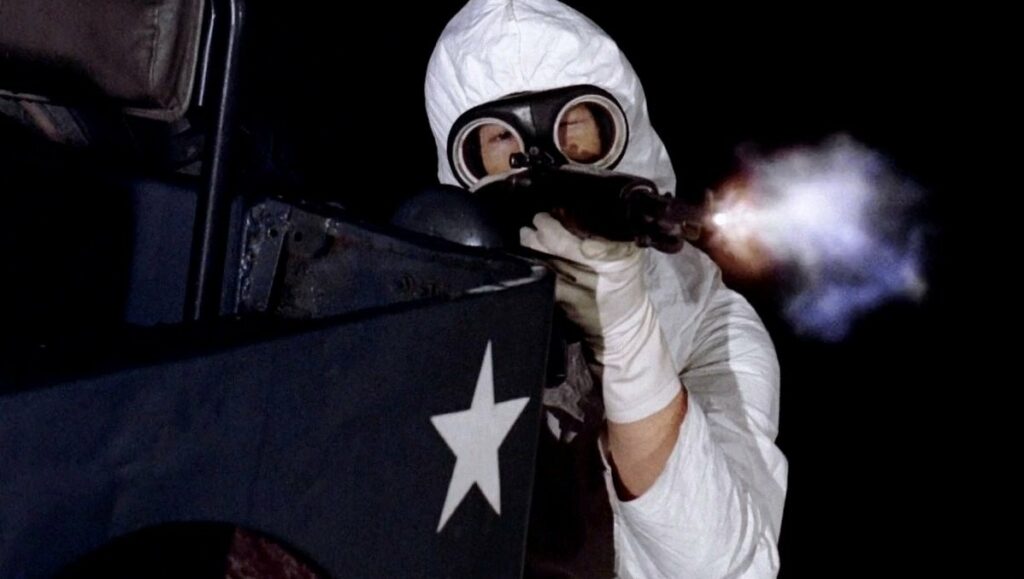
Run Time



Bodies as markers and makers of change. Desirable and desiring, abject, vulnerable, undignified, flawed and fragile, caught between the mundane and the mythological, the domestic and the supernatural. What shines through are the social, political and emotional ramifications of corporeal transgression.
Run Time

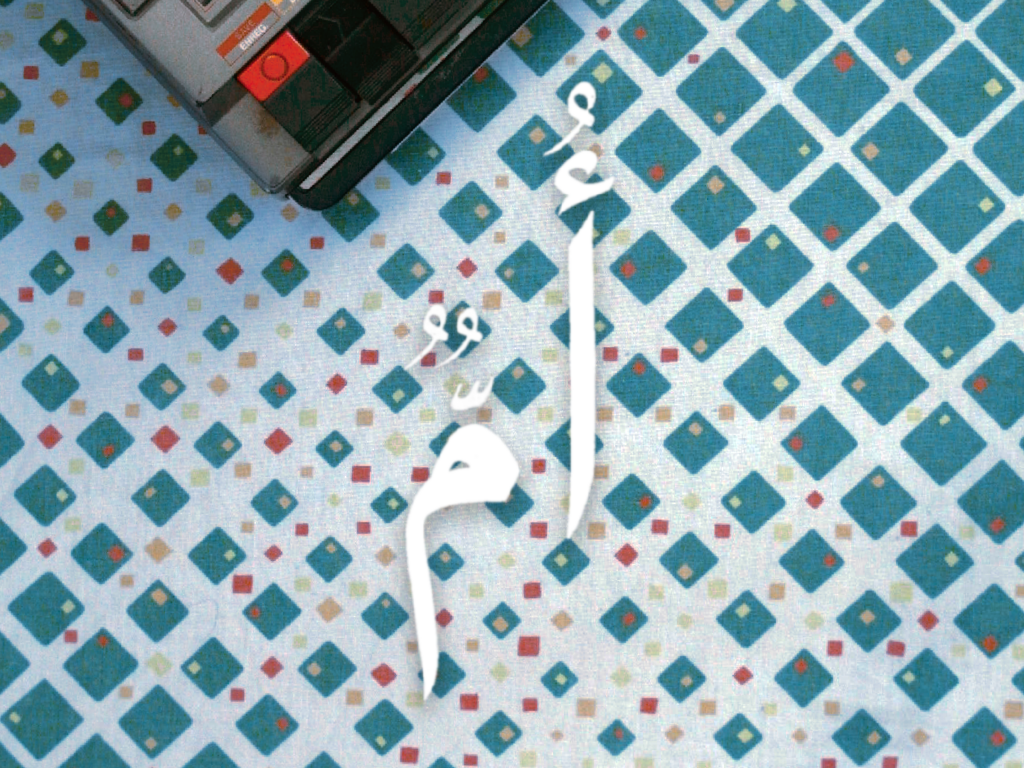




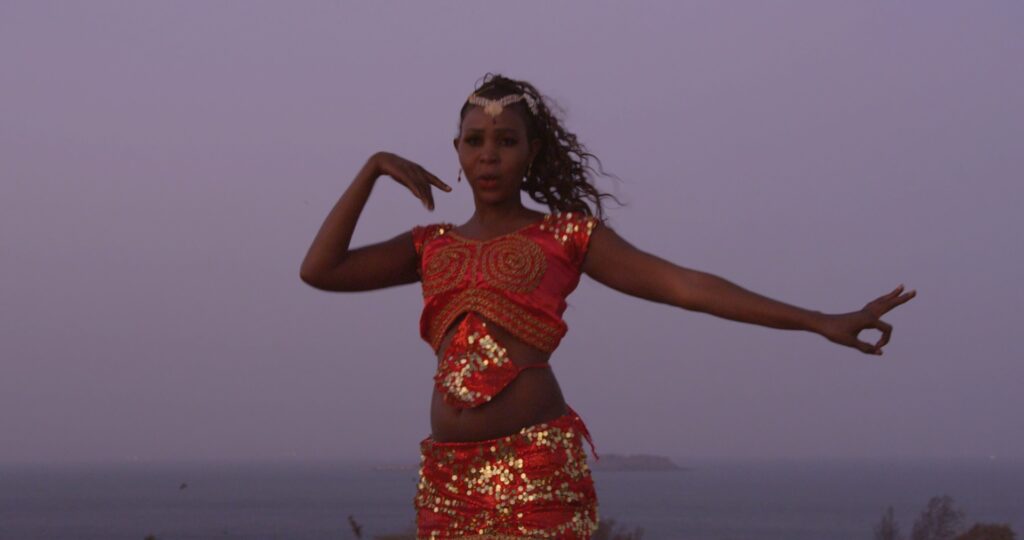
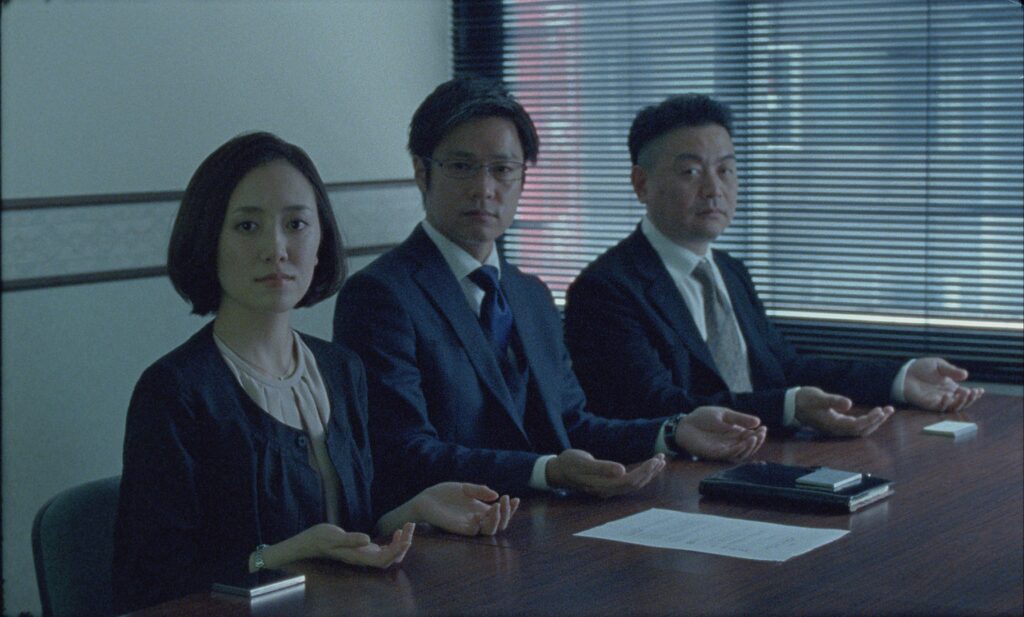

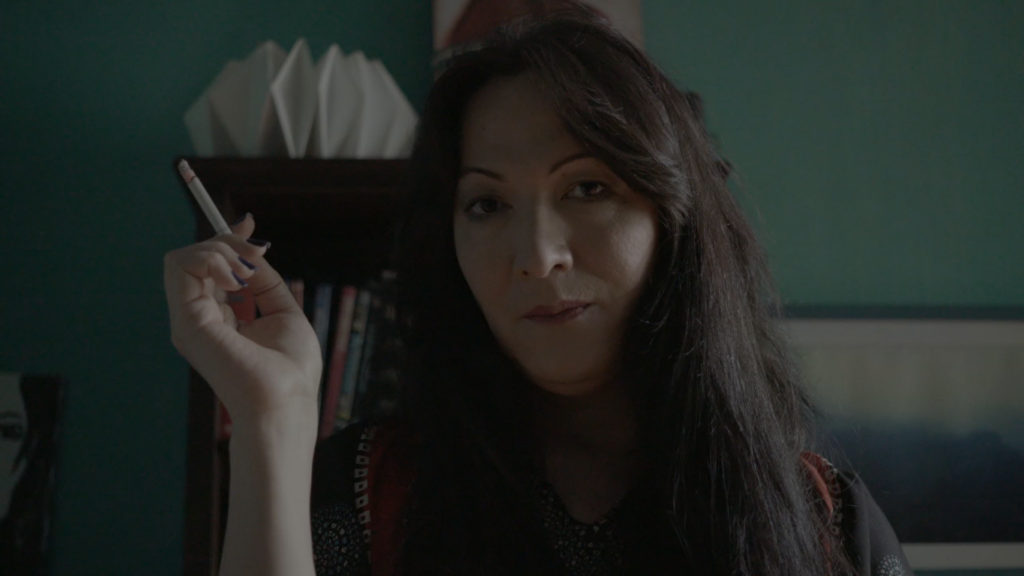
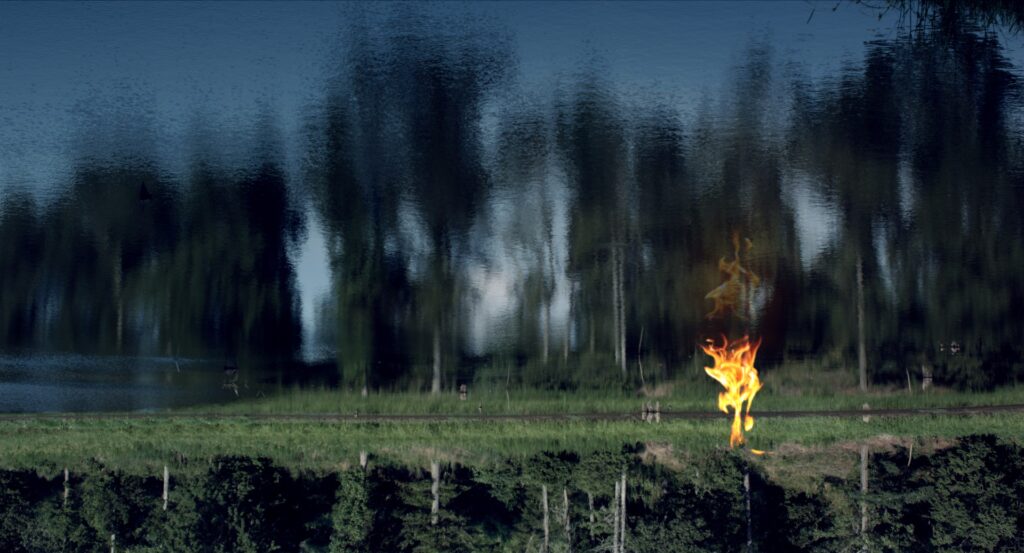


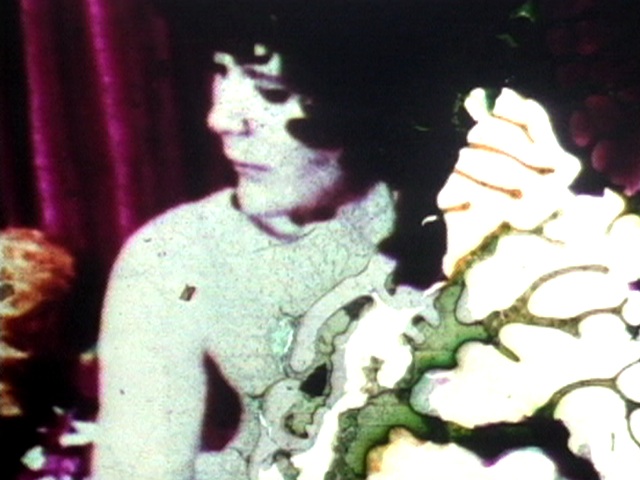

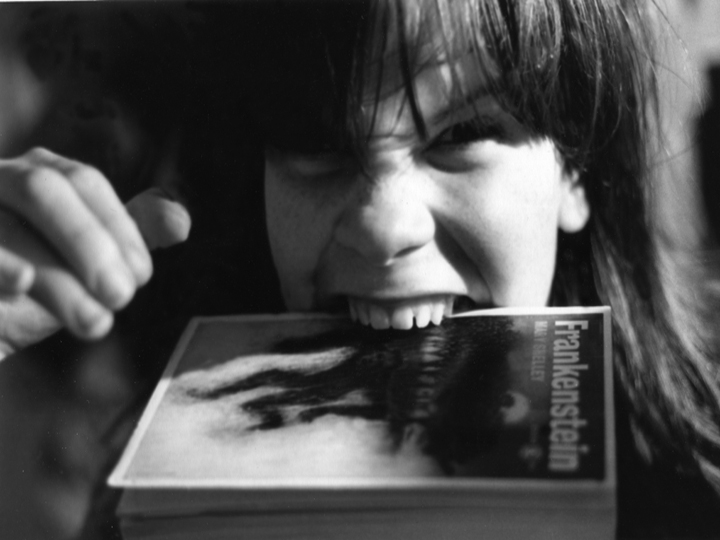
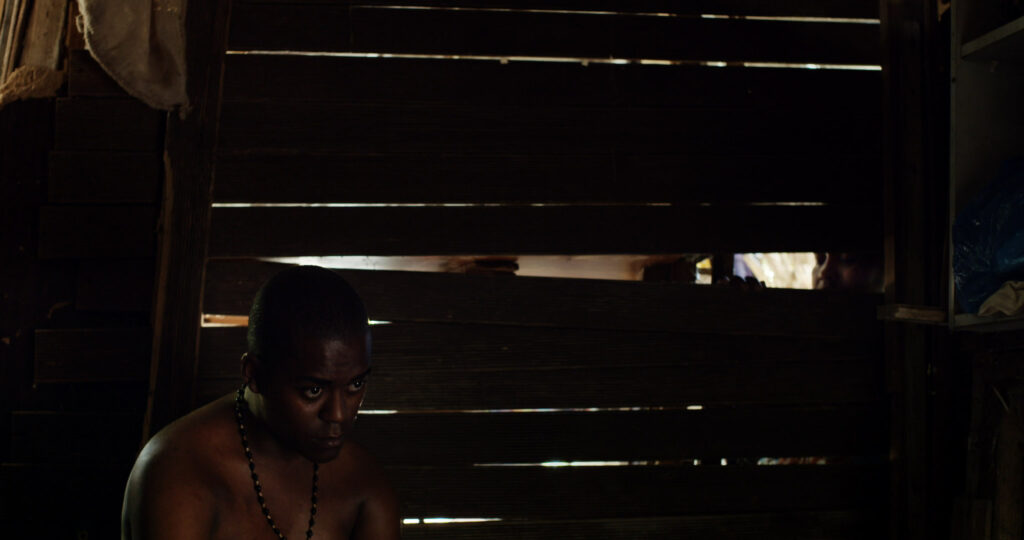
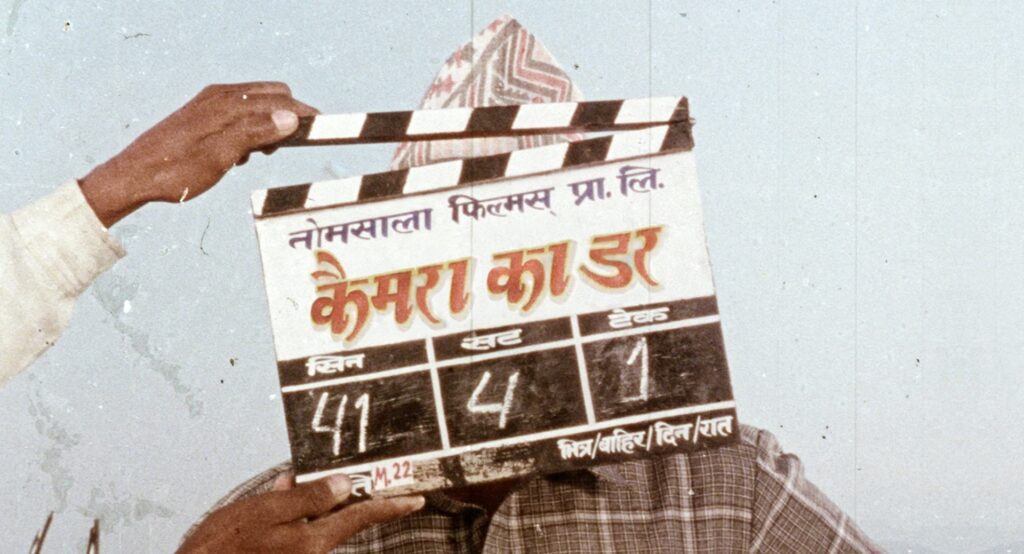



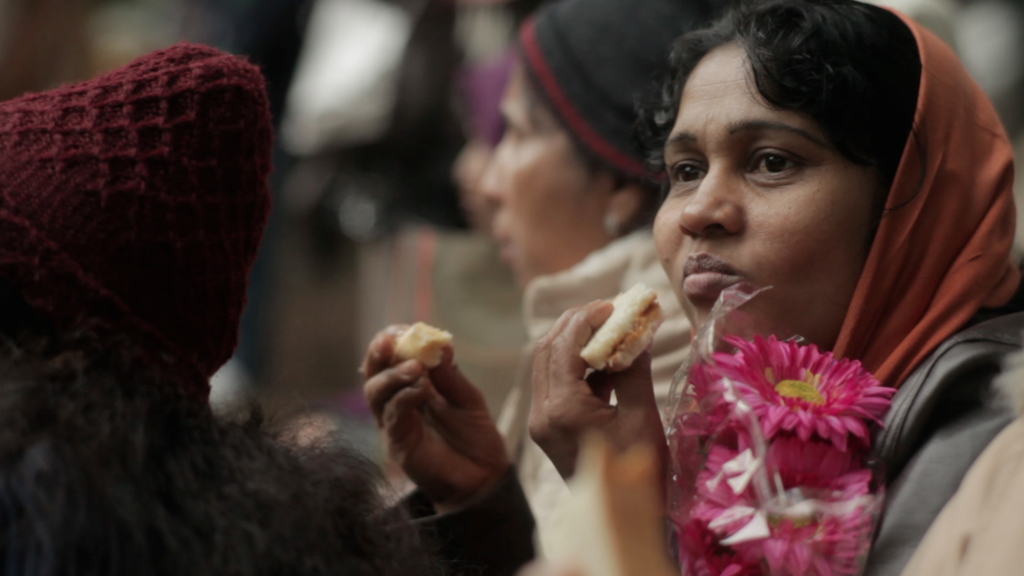
An essay in five parts, Evaporating Borders offers a series of vignettes, poetically guided by the filmmaker’s curious eye and personal reflections. Through the people she encounters along the way, the film dissects the experience of asylum seekers in Cyprus : A PLO activist and exile from Iraq is denied asylum within 15 minutes; neo-nazi fundamentalists roam the streets in an attack on Muslim migrants; activists and academics organize an antifascist rally and clash with the neo-nazis; 195 migrants drown in the Mediterranean.
Run Time


Run Time


Run Time






Our Awards programme is central to the Festival and represents some of the most exciting and ambitious contemporary filmmakers working today.
Run Time


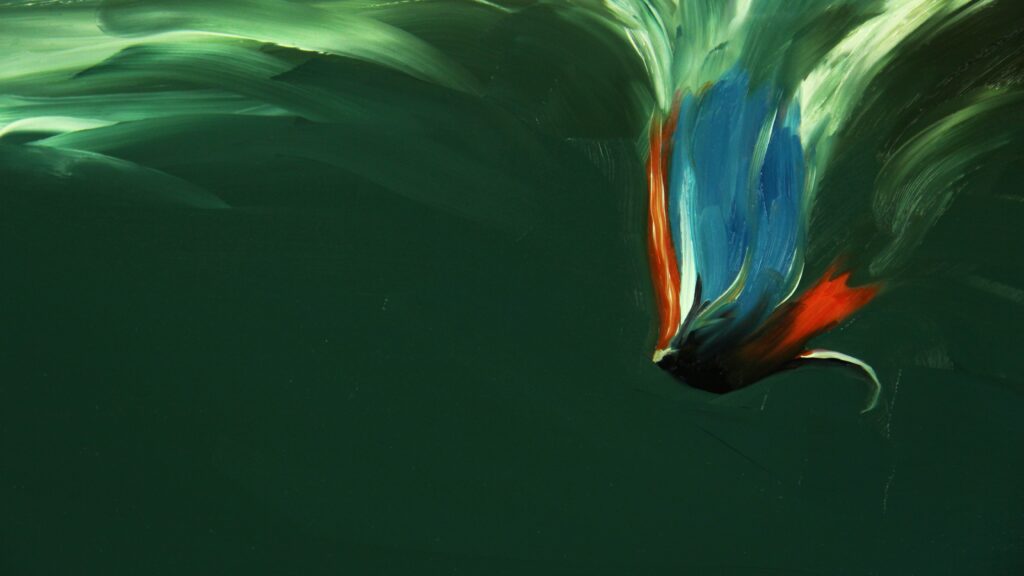



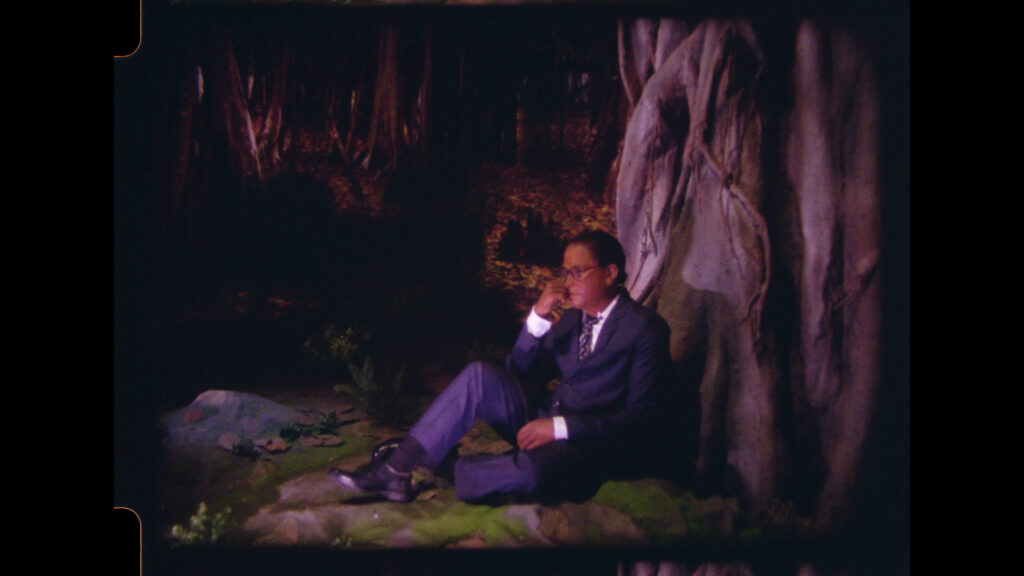
Suneil Sanzgiri’s recent video trilogy is shown here, in full, for the first time. The series is bookended by his attempts to recreate the landscapes of his father’s birth place in Curchorem, Goa. All three films utilise an aesthetics of distance and proximity to gesture to tensions, possibilities and replications when we search for ourselves in the remnants of colonial histories.
Run Time

In Maat means Land, Fox Maxy (Ipai Kumeyaay and Payómkawichum) has created an intoxicating and urgent film collage that gives invigorating expression to contemporary Indigenous identity, culture and experience. Exploring the question, “what does it mean to come from somewhere?”, Maxy pays homage to the land and his surroundings, whilst challenging us to think about the painful and multi-layered histories that exist within territories scarred by settler colonialism.
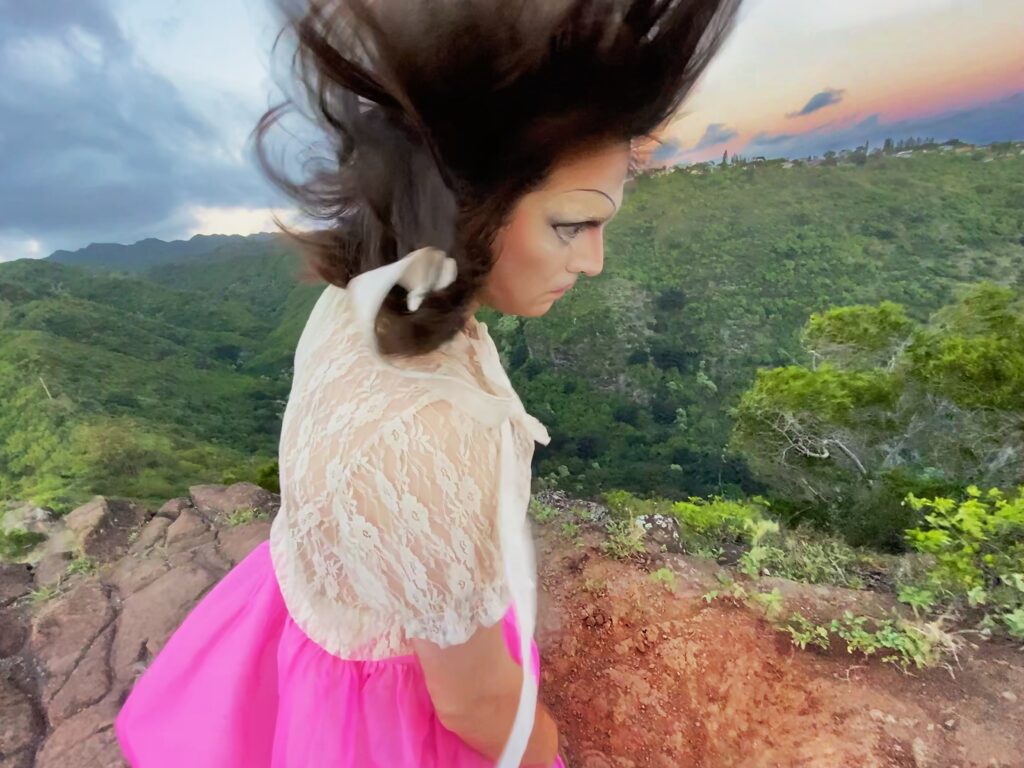
“The question always has been whether these stories of Hawai‘i have any worth to anyone in Gwangju, or vice versa. Furthermore, should the worth be the end of all stories? Why should one care, and how does one really care about the trouble beyond a national border, let alone the border of one’s skin? Here, does film educate about this method to care; or is it regenerating and readjusting the area of one’s skin?” —Sung Hwan Kim